
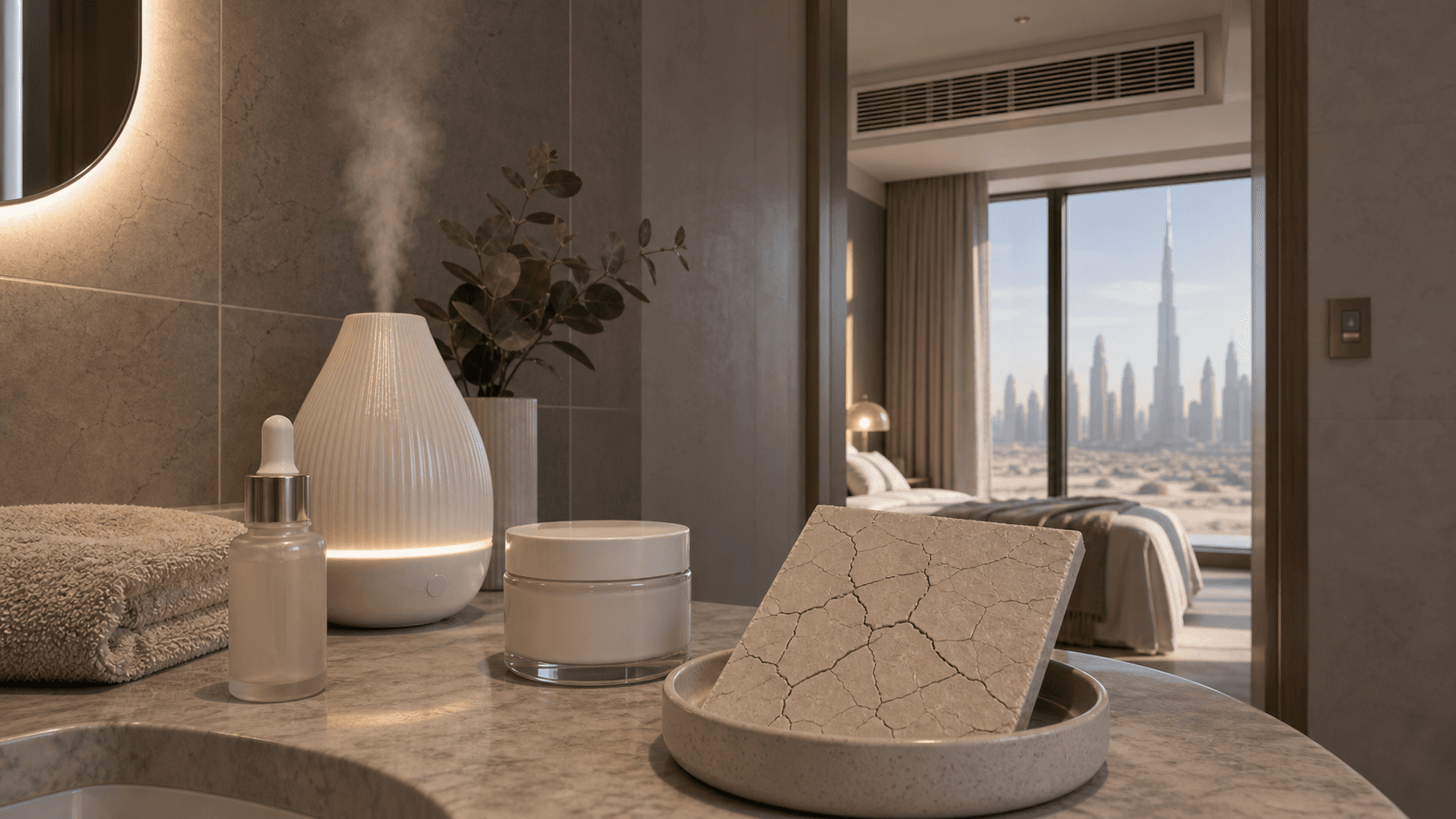
How does air-conditioning dry out your skin?
Air-conditioning reduces the humidity of indoor air, and dry air draws moisture out of your skin — weakening the barrier and leaving skin dehydrated. Because most people in Dubai spend long hours in heavily air-conditioned homes, offices, cars and malls, this exposure is constant and year-round. The irony is real: you can feel like your skin is dry and tight in one of the most humid outdoor climates, because you're actually living in dry, cooled indoor air.
Signs AC may be affecting your skin
Common signs of AC-related dehydration: Tightness or a "thirsty" feeling, especially indoors Dullness and lack of glow Flakiness or rough texture Sensitivity or a compromised barrier (see sensitive skin in the Gulf) Oily skin that's also dehydrated (oily and dehydrated aren't opposites) If your skin feels drier than your climate "should" allow, AC is a likely culprit.
Dehydrated vs dry skin: what's the difference?
Worth clarifying: dry skin is a type (lacking oil), while dehydrated skin is a condition (lacking water) that any skin type — even oily — can have. AC mainly causes dehydration. This matters because the fix isn't necessarily a heavy "dry skin" cream, but water-attracting hydration and barrier support suited to your skin type. Even oily skin in an AC environment often needs more hydration, not less.
How to counter AC-related dehydration Practical steps:
- Hydrating skincare— humectant ingredients that draw in water, plus barrier-supporting moisturiser
- Don't over-strip— gentle cleansing, avoid harsh products that worsen barrier loss
- Hydrate internally— drink enough water through the day Boost indoor humidity where you can (e.g. a humidifier at home)
- In-clinic support— skin boosters for deep hydration, hydrating facials Consistency is what keeps AC-stressed skin comfortable.
When it's more than dryness
If your skin is persistently dry, flaky, irritated or sensitive despite good hydration, it may be more than AC — a barrier issue, a skin condition, or something else worth assessing. Persistent problems are worth a dermatology appointment rather than just layering on more cream. Individual results vary.