
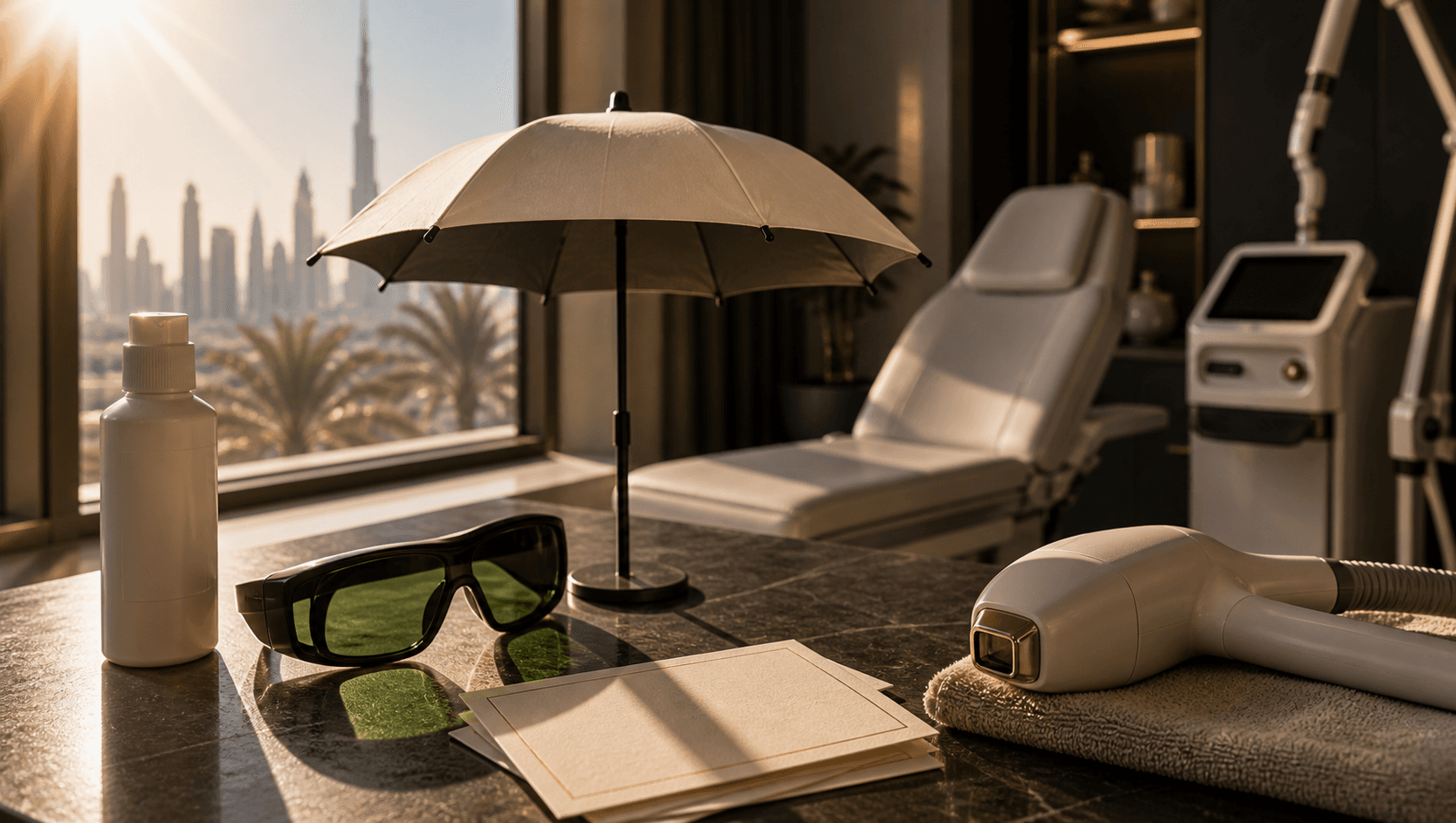
What does sun do to your skin (beyond a tan)?
A tan is actually a sign of sun damage — your skin producing extra melanin in response to UV. Over time, cumulative sun exposure drives pigmentation, premature aging and uneven tone, and it temporarily changes your skin's pigment levels. Both the long-term damage and the short-term tan are relevant to treatments — particularly anything, like laser, that interacts with melanin.
Why does a tan affect laser treatments?
Many lasers target melanin (in hair, or in pigment). When your skin is tanned, there's more melanin in the skin itself, which can compete with the intended target — reducing effectiveness and increasing the risk that the laser affects your skin (causing burns or pigmentation changes). This is true for laser hair removal and many skin lasers. A tan effectively changes the rules for the treatment.
The golden rules of laser timing To keep laser safe and effective:
Avoid deliberate tanning and sunbeds for a period before treatment (your clinician will specify)
- Don't arrive with sunburn or a fresh tan— treatment may be postponed Disclose recent sun exposure honestly so settings can be adjusted
- Protect treated skin from the sun afterward— essential to avoid post-treatment pigmentation
- Follow your clinician's specific guidance— it varies by laser and skin tone On darker skin especially, this timing and honesty protect you.
Can I have laser in Dubai despite the sun?
Yes — you don't have to avoid laser just because you live somewhere sunny. The point isn't "no laser in Dubai"; it's "laser planned around your sun exposure, with the right device and settings." Modern systems (especially Nd:YAG-capable ones) can often be adjusted for darker or sun-exposed skin, and good aftercare protects results. Some people simply prefer to do courses in cooler, lower-sun periods. (See laser safe for dark skin.)
Planning laser treatments sensibly Practical planning: schedule courses when you can
commit to sun precautions, build in sun avoidance before and after sessions, and be upfront with your clinic about upcoming beach trips or holidays so timing can be adjusted. A short appointment sets a safe schedule for your skin and lifestyle. The treatments work — they just need to be timed and protected intelligently in this climate. Individual results vary.