
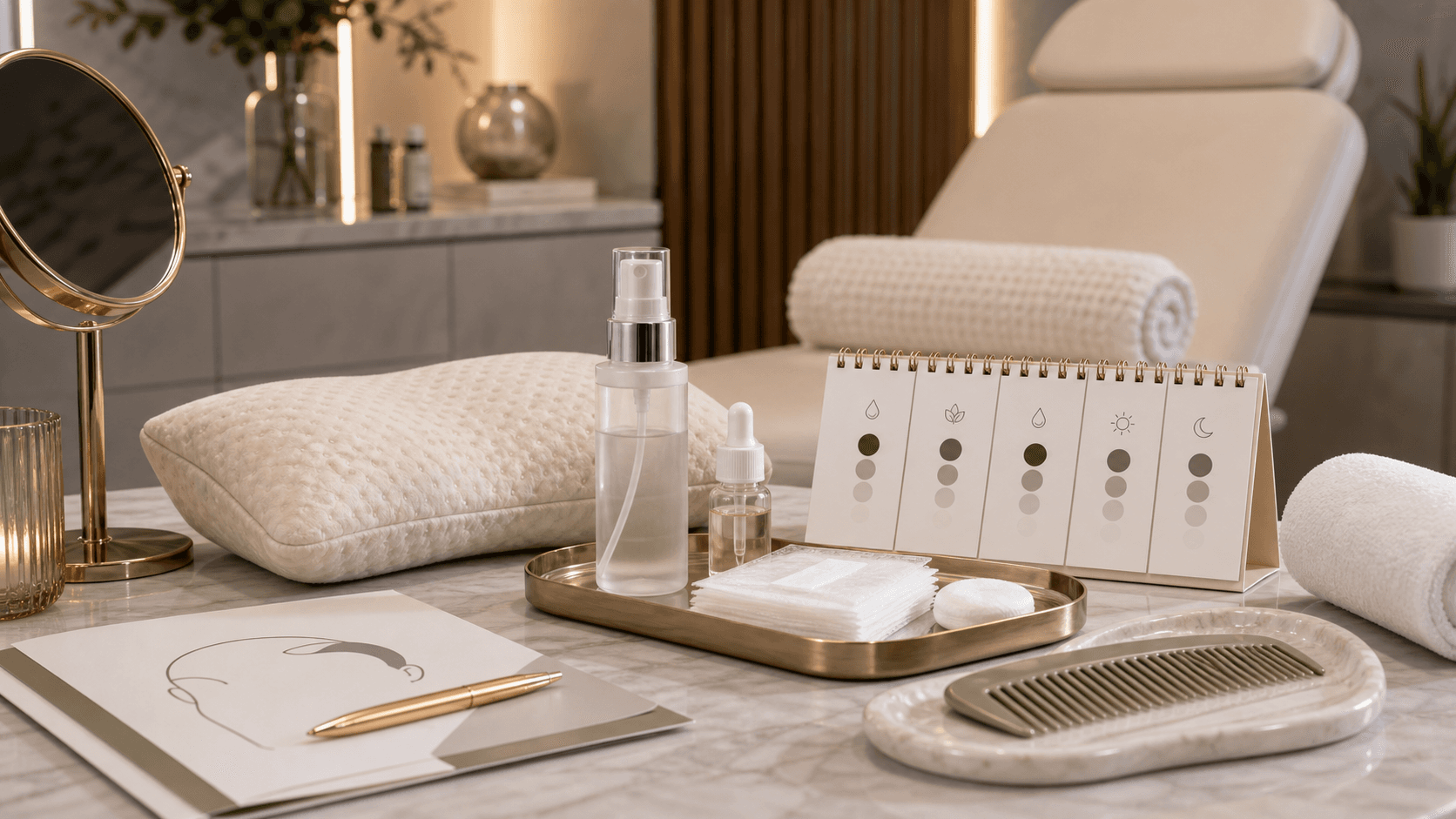
Why aftercare matters so much
A transplant relocates living follicles, and in the first days and weeks those grafts are settling into their new home. The right aftercare protects them during this vulnerable period and supports healthy healing; poor aftercare can compromise results. Many people focus all their attention on the procedure itself and underestimate the recovery — but the aftercare phase is where good results are protected. See our post-transplant care support.
The early days: gentle and careful
In the initial period after a transplant, general principles (always follow your surgeon's/clinic's specific instructions) include:
- Gentle handling— avoid touching, scratching or knocking the grafted area
- Careful washing— exactly as instructed, usually very gently and not immediately
- Sleeping position— often with the head elevated, as advised
- Avoiding sweat and strain— no intense exercise, saunas or heavy exertion for a period No hats or coverings unless and as advised
- Your specific instructions take priority— these are general principles, not a substitute for your clinic's guidance.
Protecting the scalp (and
Dubai's sun) The healing scalp is sensitive, and sun protection is especially important in Dubai's strong sun — direct sun on a healing scalp should be avoided, with protection as advised by your clinic. Equally important is avoiding anything that irritates or overheats the scalp early on. Treating the area gently and keeping it protected supports both comfort and the result.
What about shedding after a transplant?
This surprises many people: it's normal for transplanted hairs to shed in the weeks after the procedure before new growth begins — this is an expected part of the cycle, not a failed transplant. Regrowth then develops gradually over the following months. Knowing this in advance prevents unnecessary alarm. Your clinic will explain the expected timeline so you know what's normal.
How PRP and ongoing care can support results Beyond the immediate recovery, ongoing
care helps protect and maximise results: PRP is often used to support healing and the health of both transplanted and surrounding hair Medical treatment may be continued to protect your existing (non-transplanted) hair, which can still thin over time Ongoing scalp and hair care and follow-up This is where a dermatologist-led clinic adds value — supporting your recovery and long-term hair health, even if the transplant itself was performed elsewhere. Individual results vary.