
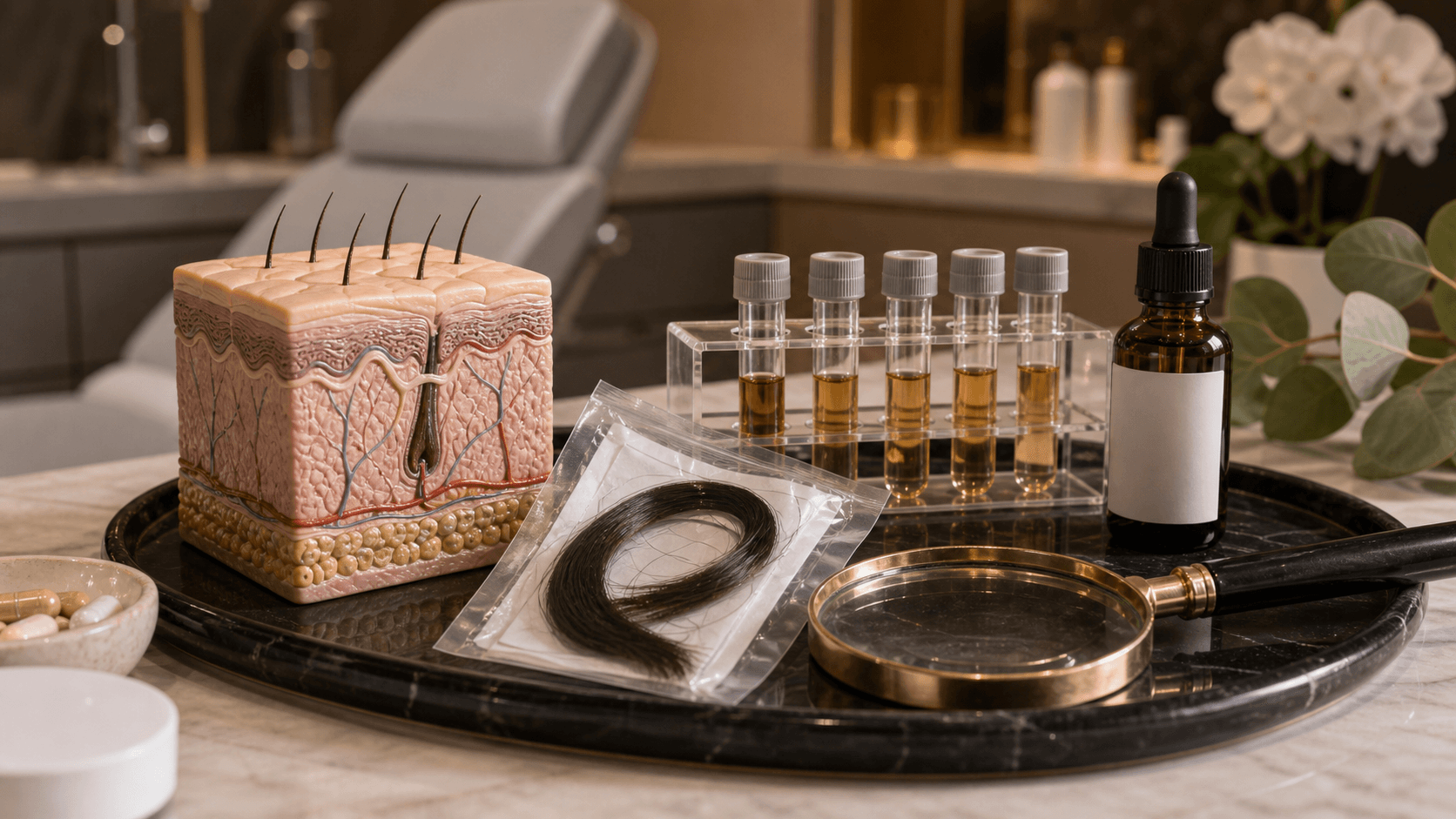
Why hormones affect skin and hair
Hormones act as messengers throughout the body, and several directly influence skin and hair — affecting oil production, skin cell turnover, hair growth cycles and more. When hormone levels shift (puberty, menstrual cycles, pregnancy, menopause, or imbalances), skin and hair can respond visibly. That's why these concerns often fluctuate with hormonal events — a clue that the cause may be more than skin-deep.
Common hormone-linked skin and hair concerns
Concerns that can have a hormonal component include:
- Hormonal acne— often along the jawline/chin, flaring with the cycle
- Oiliness— hormones influence oil (sebum) production
- Hair thinning / loss— some hair loss is hormone-related
- Unwanted facial/body hair— can be hormonally driven (see facial & hormonal hair) Skin changes around menstrual cycle, pregnancy or menopause
- Not all of these are hormonal— but when they're persistent or pattern-linked, hormones are worth considering.
Why treating the surface isn't always enough
Here's the key insight: if a skin or hair concern has an underlying hormonal driver, treating only the surface (topical products, or even aesthetic treatments) may give limited or temporary results, because the cause keeps pushing. For example, hormonal acne often needs more than topical care; some hair thinning needs the underlying factor addressed. Recognising a possible internal cause means you can treat both the surface and the root — which often works far better.
When to consider looking deeper
It may be worth assessing for a hormonal component when a concern is: Persistent or not responding to surface treatment Pattern-linked (e.g. flaring with your cycle) Accompanied by other symptoms (fatigue, cycle changes, weight or mood changes — see signs of hormonal imbalance) Sudden or significant (e.g. notable hair loss or new excess hair) In these cases, a doctor can assess whether hormonal testing or further evaluation is warranted — rather than you guessing.
A combined approach often works best
The most effective approach to hormone-linked skin and hair concerns is frequently combined: appropriate dermatology or hair care for the surface, plus a medical assessment of any underlying hormonal factor — and addressing that where found. This is exactly why our clinic links skin, hair and screening care. A appointment can help connect the dots and decide whether looking deeper is sensible for you. Importantly, this is doctor-guided, not self-diagnosed or self-treated. Individual situations vary.