
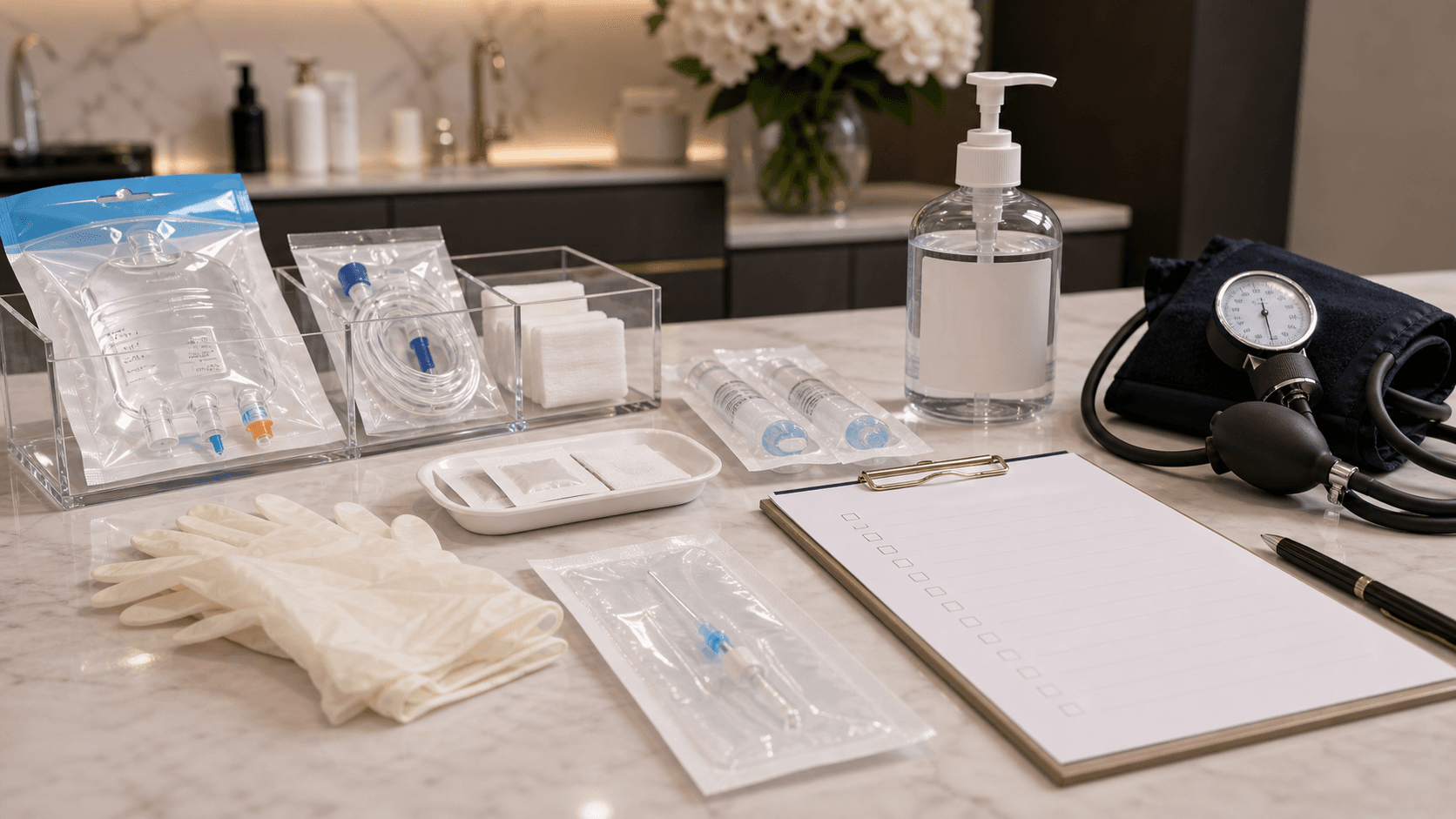
What makes IV therapy safe?
The safeguards matter more than the drip itself: A medical assessment first — confirming it's appropriate for you A DHA-licensed clinic and trained medical staff administering it Appropriate, genuine products and proper, sterile technique Suitability — that you're not in a group it's inadvisable for Monitoring during and aftercare When these are in place, IV therapy is generally well tolerated. When they're skipped, risk rises — which is exactly why setting and supervision are non-negotiable.
What are the possible risks?
Even done properly, IV therapy has considerations (mostly uncommon and usually minor): discomfort, bruising or irritation at the injection site; rarely, infection if technique isn't sterile; reactions to the contents; and, importantly, risks if too much of certain substances is given or if it's given to someone it isn't suitable for. This is why assessment and medical supervision are essential — they're what keep these risks low. Serious problems are uncommon with proper care but real if corners are cut.
Who should be cautious or avoid IV therapy?
IV therapy is not suitable for everyone. It may be inadvisable or need special caution with: Heart or kidney conditions (fluid balance matters) Certain other medical conditions Pregnancy or breastfeeding Allergies to ingredients Some medications This is precisely why a proper medical assessment comes first — to identify whether IV therapy is safe for you specifically. Never assume a "wellness drip" is fine for everyone.
What to check before you book
Before booking IV therapy anywhere, confirm: ✔ a medical assessment is part of it ✔ the clinic is DHA-licensed and staff are medically trained ✔ genuine products and sterile technique ✔ they'll check your suitability and medical history ✔ honest claims, not hype. Be wary of pop-up or non-medical settings, no-assessment "menu" drips, and bold health promises. (Our safe-clinic guide applies here too.)
Our approach to safe IV therapy
At Endless Beauty Clinic, IV therapy is treated as the medical treatment it is — assessed by a doctor, administered by trained staff, and recommended only where appropriate (and we'll say if it isn't, or suggest testing first). Safety and honesty come before any "wellness" sell. If you're considering IV therapy, an appointment confirms whether it's safe and suitable for you. Individual suitability varies.