
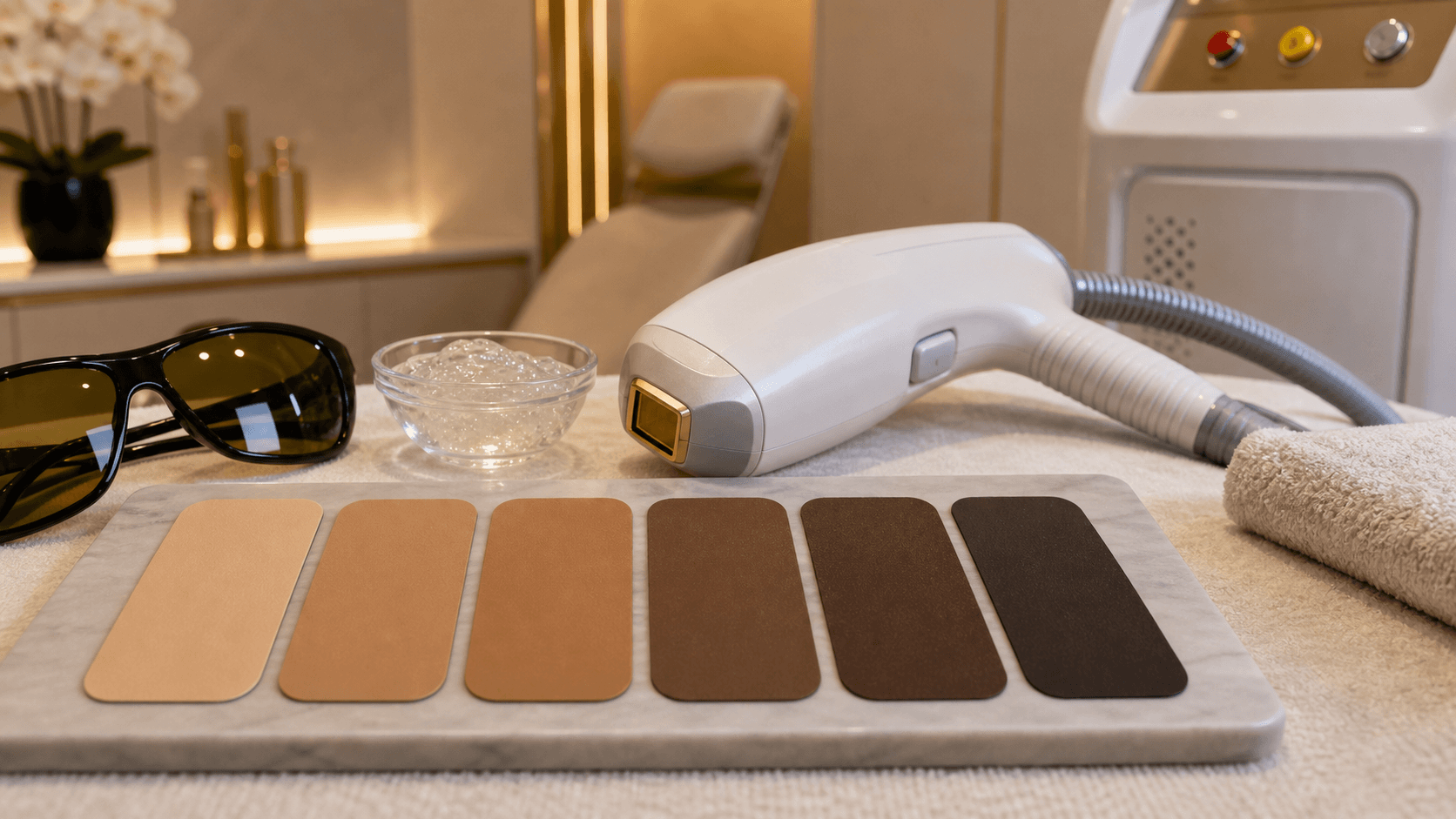
Why was darker skin once considered higher-risk?
Laser hair removal works by targeting melanin in the hair. On darker skin, there's also more melanin in the skin itself — so older, singlewavelength lasers could mistakenly target the skin, raising the risk of burns or pigmentation changes. That history is real, and it's why caution is sensible. But technology has moved on significantly.
How do modern lasers make it safe?
Newer systems use wavelengths and settings that can bypass the skin's pigment and focus on the hair follicle. The Nd:YAG (1064nm) wavelength in particular penetrates deeper without overheating the skin's surface, making it well-suited to darker tones — and platforms combining wavelengths (e.g. Alexandrite + Nd:YAG) let a clinician tailor treatment to your exact skin type. Cooling systems add further protection. [cite: device manufacturer / peerreviewed]
What makes the difference in practice?
Three things: the right device, the right settings for your skin type, and an experienced operator who assesses your skin (often using the Fitzpatrick scale) and does a patch test first. A reputable clinic will adjust energy levels for melanin-rich skin and may treat conservatively at first. This is exactly why "who treats you" matters as much as "which laser."
Does sun and tanning change things?
Yes — and this is especially relevant in Dubai. A recent tan increases the melanin in your skin, which can raise risk, so clinics often advise avoiding sun and tanning before treatment and adjusting settings accordingly. We cover timing in our summer/sun article. Always disclose recent sun exposure honestly so your clinician can keep you safe.
How we approach darker skin tones
At Endless Beauty Clinic, treatments use medical-grade platforms suited to a range of skin types, with settings tailored to you and a patch test before a full session. The goal is effective, comfortable long-term hair reduction while protecting your skin. See our laser hair removal services. Individual results vary.