
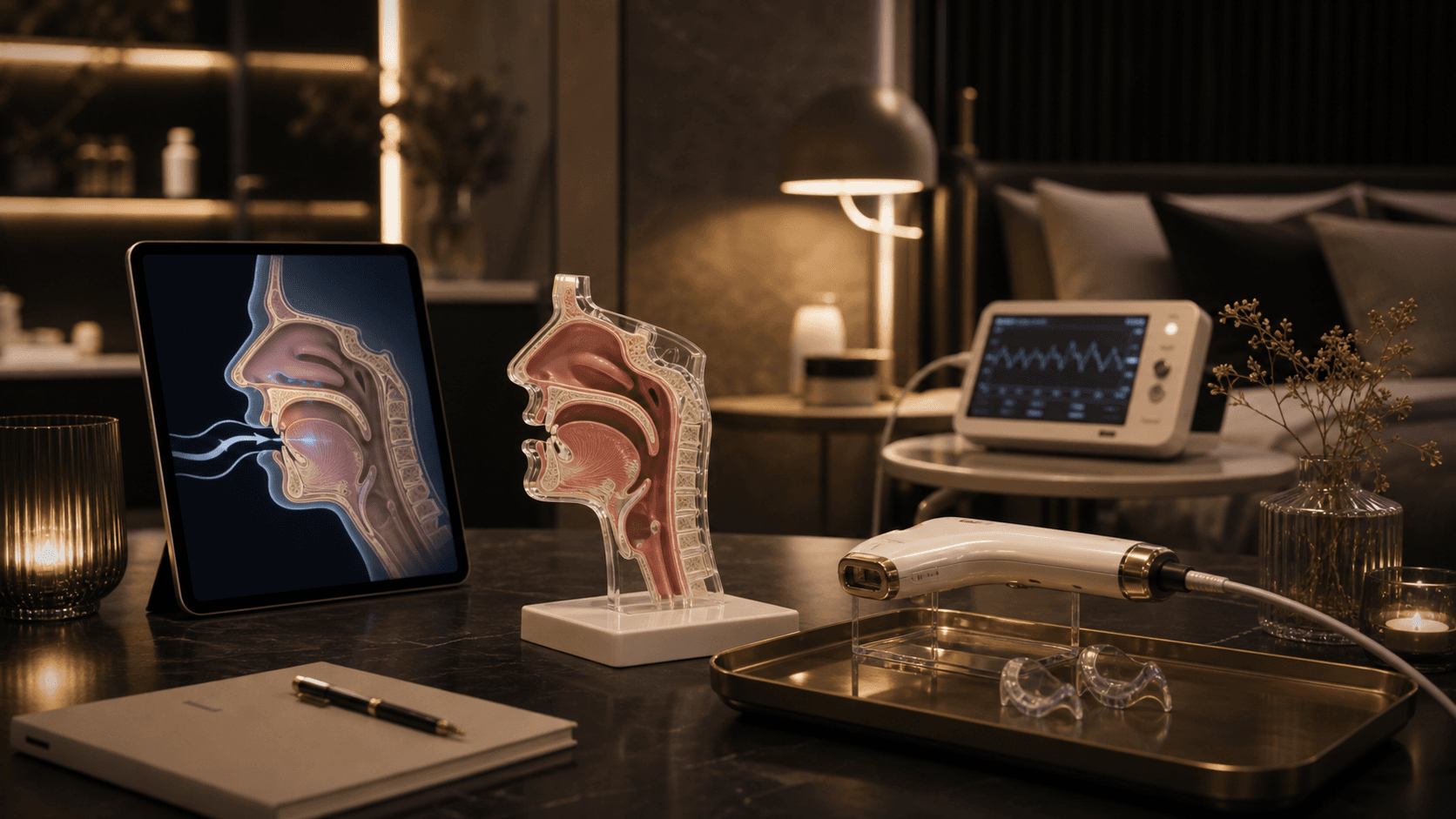
How does NightLase work?
NightLase uses controlled Fotona laser energy applied to the softpalate area. The aim is to support and gently firm this tissue, which may help reduce the vibration that causes snoring. It's done over a short course of comfortable in-clinic sessions, with no incisions and nothing to wear while you sleep. See the NightLase service.
Who might it help?
NightLase may suit people whose snoring is related to soft-tissue vibration and who want a non-invasive option. It's not right for everyone, and results vary between individuals. The most important step is establishing why you snore — because the right treatment depends on the cause, and some causes need medical management rather than a laser.
Important: snoring vs sleep apnoea
This is the part we won't gloss over. Snoring can sometimes be a sign of obstructive sleep apnoea (OSA) — a medical condition where breathing repeatedly pauses during sleep, which has real health implications and needs proper diagnosis and treatment. NightLase is aimed at snoring, not a treatment for sleep apnoea. If you have signs like gasping/choking in sleep, daytime sleepiness, or a partner notices you stop breathing, you should be medically assessed first. Our clinician will flag this and recommend appropriate evaluation or referral.
What's the treatment like?
Sessions are gentle and performed over a short course, with guidance on what to expect and any aftercare. There's no surgery and minimal disruption. Because it's a series, the effect builds across the course; some people consider periodic maintenance.
Why does an appointment matter here especially?
Because snoring can have several causes — and one of them is a medical condition that shouldn't be missed. A appointment establishes whether NightLase is appropriate for you, or whether you should be assessed for sleep apnoea first. Treating the snoring without checking for an underlying issue would be the wrong order. Individual results vary.