
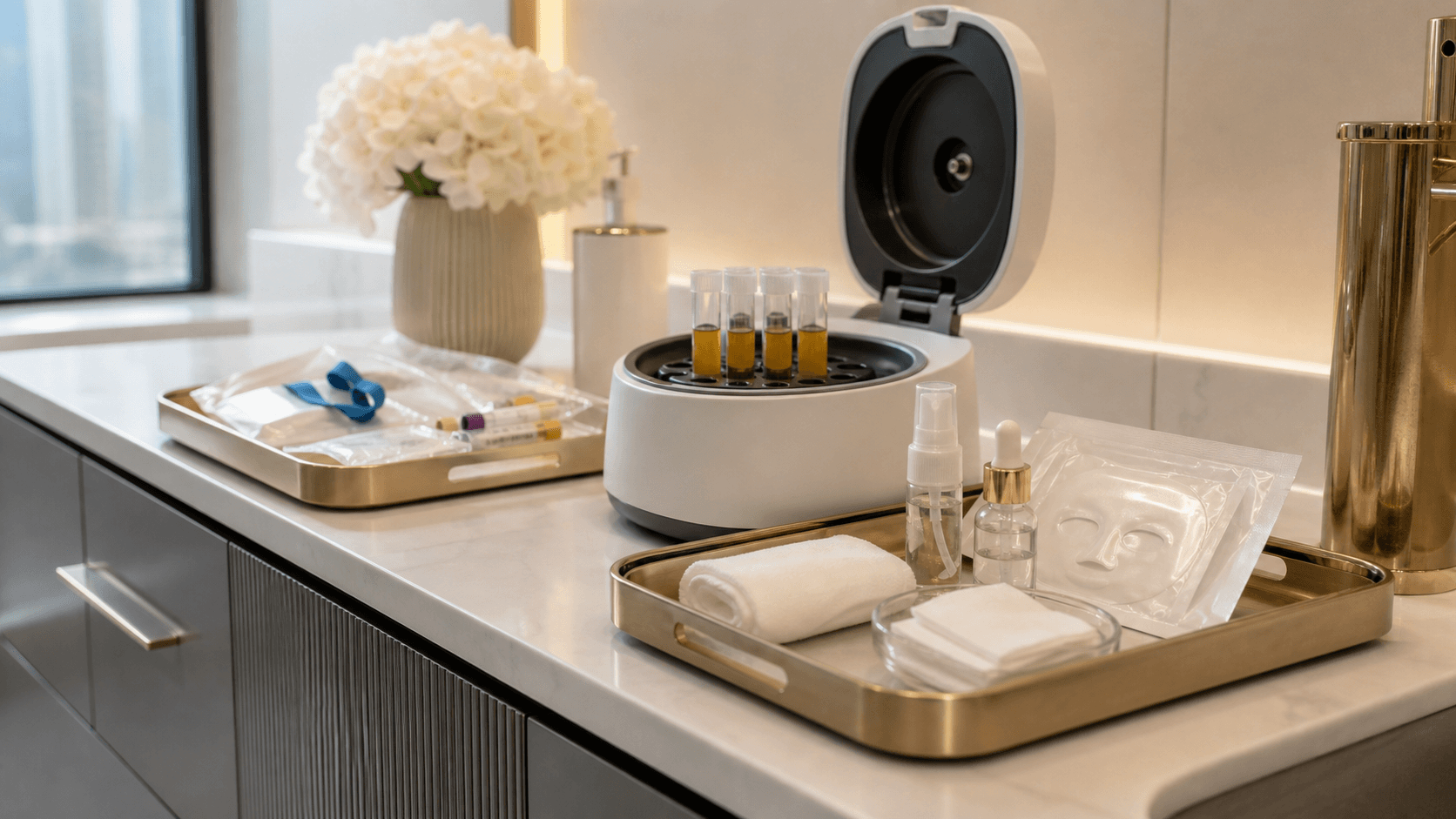
Before your treatment
It starts with an appointment and health review to confirm PRP is suitable for you. You may be advised to stay hydrated, and to avoid certain medications or supplements beforehand (your clinician will tell you which). You'll discuss the area being treated, the plan, and realistic expectations. Good preparation helps the treatment go smoothly.
Step 1: The blood draw
A small sample of your blood is taken, exactly like a routine blood test. This is the part people are sometimes nervous about, but it's quick and familiar. The amount needed is small. From this sample, your own PRP will be prepared — nothing synthetic is involved.
Step 2: Processing the
PRP Your blood sample is placed in a centrifuge, which spins it to separate and concentrate the platelets and growth factors into plasma. This takes a few minutes and happens while you wait. The result is the platelet-rich plasma that will be applied to your skin or scalp.
Step 3: Application
The PRP is then applied to the treatment area, in one of two main ways:
- Injection— small injections into the target area (e.g. for hair or specific facial areas)
- With microneedling— micro-channels are created and the PRP applied so it penetrates A numbing cream is typically used for comfort, and the sensation is generally well tolerated. This step is usually the quickest part.
After your treatment: downtime and aftercare Downtime is usually short:
Some redness and mild sensitivity (a little more with microneedling — a "sunburn-like" feeling for a day or so) Aftercare typically means gentle products, avoiding heat/intense exercise briefly, and diligent sun protection (important in Dubai) Most people return to normal activities quickly Your clinician gives specific aftercare for your treatment. Results build gradually over the following weeks, and a course is usually recommended. Individual results vary.
Does it hurt, and is it safe?
With numbing, most people find PRP comfortable — the blood draw and injections feel like brief pinches; microneedling feels like light scratching during the pass. Because PRP uses your own blood, it's biocompatible, and it's performed by trained clinicians in a medical setting after a health check. If you're anxious, tell your clinician — they'll talk you through each step.