
Why does SPMU sometimes go wrong?
Common reasons people seek correction: Shape or thickness they're unhappy with
- Colour change over time— old or poor-quality pigment can fade to unwanted tones (e.g. brows turning reddish/orange or bluish-grey) Uneven fading or patchiness Work done by an under-qualified practitioner (a real risk with choosing on price) Pigment sitting too dark, too bold, or migrated
- Much of this traces back to technique and pigment choice— which is why practitioner quality matters so much in the first place.
What is colour correction?
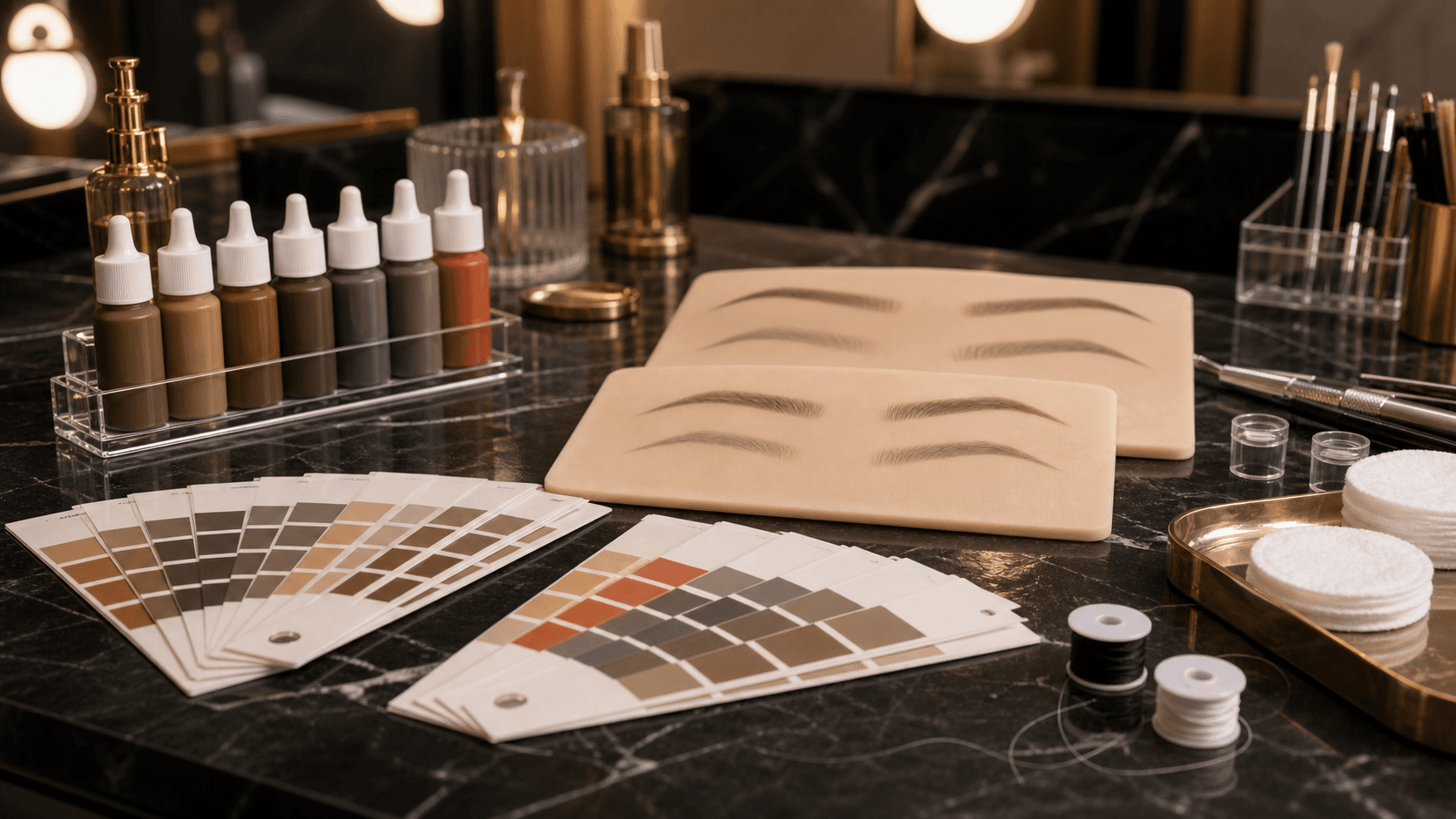
Colour correction is a specialised technique to neutralise or adjust unwanted tones in existing SPMU — for example, counteracting a reddish or grey cast — using colour theory and corrective pigments. It's genuinely skilled work: the practitioner is working over existing pigment, so it requires real expertise to assess the current colour and correct it without making things worse. This is not entry-level work, and choosing an experienced corrective specialist matters.
What correction can (and can't) do
Honest scope:
- Can often: improve shape (within limits), neutralise unwanted colours, soften over-bold work, and refresh faded results
- Can't always: completely erase existing work, or achieve a perfect "blank slate" — because the practitioner is working with pigment already in the skin
- Sometimes: the best path involves waiting for further fading, or removal before re-doing A reputable specialist will be honest about what's realistically achievable for your situation, rather than promising a perfect fix.
The role of fading and removal
Two realities to understand:
- Patience/fading— sometimes the wisest approach is to let existing SPMU fade further before correcting or re-doing, rather than adding more pigment immediately
- Removal— in some cases, removal of existing pigment (by appropriate methods) may be advised before new work A good corrective practitioner won't rush to layer over problem work — they'll plan a realistic, sometimes staged, approach. Quick fixes that ignore this can make things worse.
How to approach correction
If you have SPMU you're unhappy with: See an experienced corrective specialist (correction expertise specifically — not just any SPMU practitioner) Have a thorough appointment and an honest assessment of what's achievable Bring information about the original work if you have it Be prepared for a staged approach and realistic (not perfect) results Set realistic expectations and be patient A appointment is the right first step. As with revision surgery, fixing prior work is more complex than getting it right first time — which is the best argument for choosing carefully at the start. Individual results vary.