
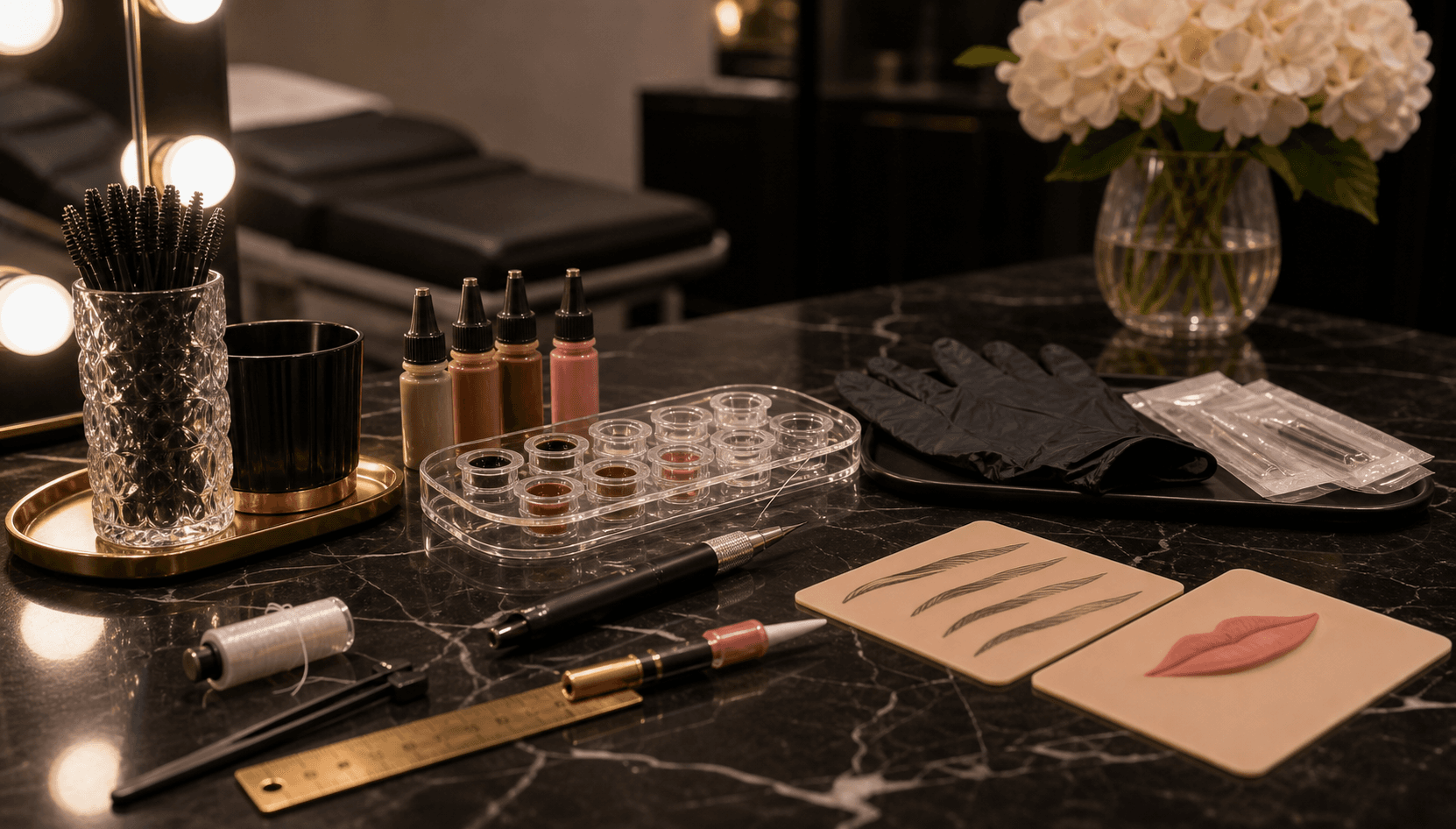
What is semi-permanent makeup?
SPMU is a form of cosmetic tattooing: fine deposits of pigment are placed into the upper layers of the skin to mimic or enhance makeup. Unlike traditional tattoos (deeper, permanent), SPMU is placed more superficially and uses pigments designed to fade gradually over time — which is why it's "semi-permanent" and needs refreshing. It's a skilled, technique-dependent procedure, and because it involves breaking the skin, hygiene and a qualified practitioner matter a great deal.
What are the main SPMU treatments?
- The most common treatments: Brows— e.g. microblading (hair-like strokes) or shading/ombré techniques to define and fill brows
- Lips— lip blush, adding soft colour and definition (colour, not volume)
- Eyes— eyeliner enhancement
- Scalp— scalp micropigmentation for the look of density (a related technique) Each enhances a feature subtly; our semi-permanent makeup services cover the options.
How long does it last?
"Semi-permanent" is the key word: results typically last a period of months to a couple of years, depending on the treatment, your skin, your lifestyle and sun exposure — then gradually fade, requiring top-ups to maintain. It's not permanent, and that's actually a feature: it lets the look be refreshed and adjusted as styles and your face change over time. Anyone promising "permanent" results isn't being accurate. (See how long it lasts.)
Is it safe?
What matters most Because SPMU breaks the skin and deposits pigment, safety comes down to the practitioner and hygiene: A qualified, experienced, licensed practitioner in a clean, regulated setting Sterile, single-use needles and proper hygiene A patch test beforehand (for pigment sensitivity/allergy) Honest assessment of suitability (some conditions, pregnancy, etc. may mean it's not advised) This isn't a treatment to choose on price or convenience — qualifications and hygiene are a genuine safety matter. (Our how to choose a clinic principles apply.)
What's the process like?
Typically: an appointment to agree shape, colour and expectations; the procedure itself (with numbing for comfort — though "painless" is never guaranteed); a healing period during which colour looks darker then softens as it settles; and usually a top-up/perfecting session a few weeks later. Colour matures over a few weeks, so the true result isn't the day-one look. Patience through healing is part of it. (See SPMU aftercare.)
Who is it for?
SPMU may suit people who want to save time on makeup, define sparse or faded features (e.g. thin brows), have steady definition through the day, or have difficulty applying makeup. It's elective and cosmetic, so it's entirely a personal choice — and a good practitioner will set realistic expectations and confirm suitability (and any reasons to avoid it) at appointment. Results vary person to person.