
When Should You See a Dermatologist vs a Beautician?
Not sure whether you need a dermatologist or a beautician? A dermatologist explains the difference and when medical skin care is the right call.
By Endless Beauty ClinicJune 7, 20264 min read
As a rule of thumb: see a beautician or facialist for relaxation, maintenance and general "glow," and see a dermatologist when there's an actual skin concern to diagnose or treat — acne, scarring, pigmentation, rosacea, persistent or changing skin issues. Both have their place; the key is matching the concern to the right expertise. Here's how to decide.
treatments — cleansing facials, gentle exfoliation, hydration, massage and general maintenance. These are great for upkeep, relaxation and that well-cared-for glow, and a good facial can absolutely be part of healthy skin. What they don't do is diagnose or medically treat skin conditions.
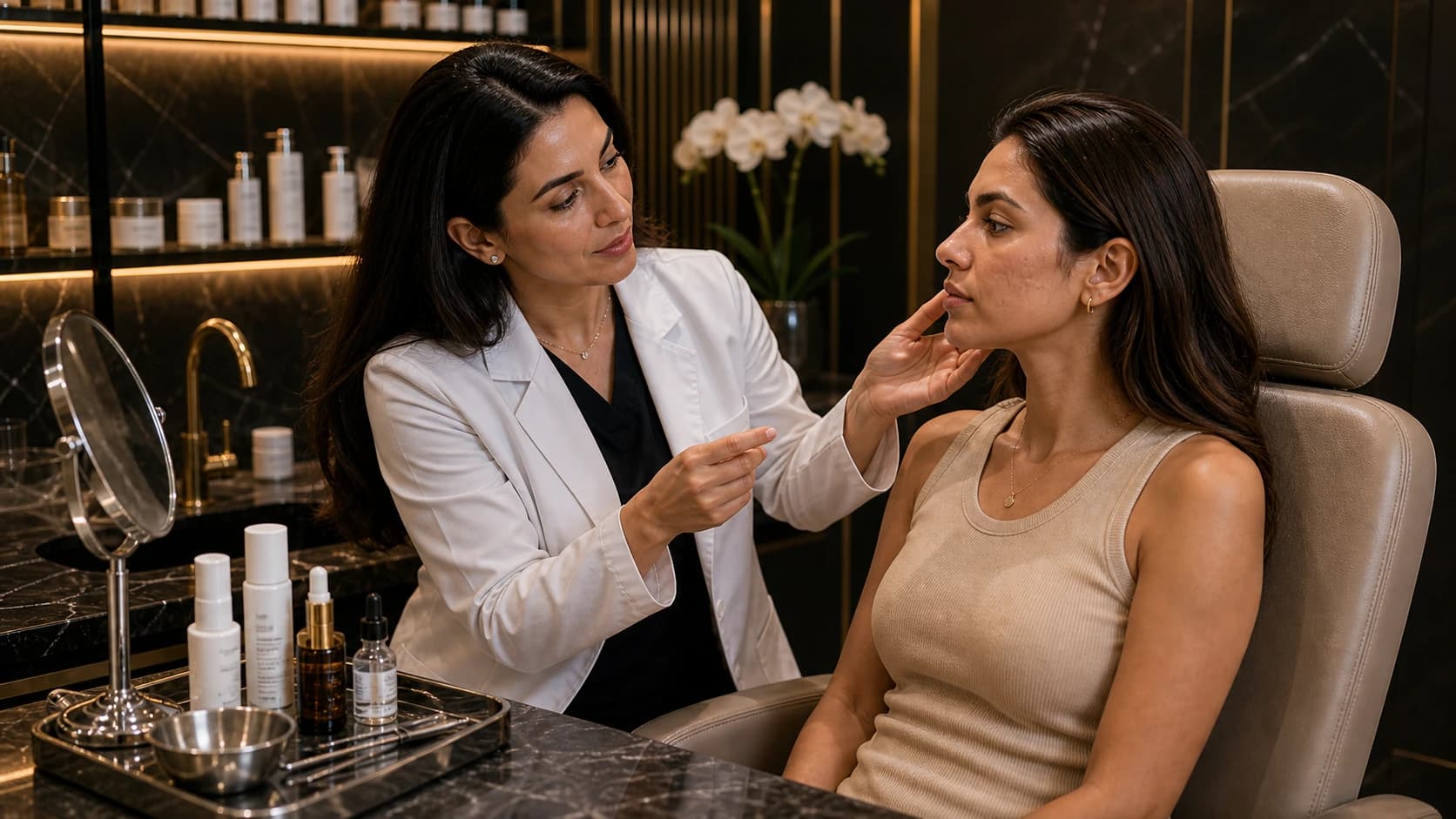
A dermatologist is a medical doctor specialising in skin. They diagnose and treat skin conditions, prescribe medication, and perform or direct medical treatments — for acne, scarring, pigmentation, rosacea, suspicious or changing spots, and more. When there's a problem to solve (not just maintenance), this is the expertise you want, because the plan is built on a diagnosis rather than guesswork.
What You Will Learn
What does a beautician or facialist do? Beauticians and facialists provide cosmetic skin
Not sure whether you need a dermatologist or a beautician? A dermatologist explains the difference and when medical skin care is the right call.
What does a dermatologist do?
Not sure whether you need a dermatologist or a beautician? A dermatologist explains the difference and when medical skin care is the right call.
How do you decide which you need?
Not sure whether you need a dermatologist or a beautician? A dermatologist explains the difference and when medical skin care is the right call.
Why does the difference matter most for some concerns? For pigmentation and darker
Not sure whether you need a dermatologist or a beautician? A dermatologist explains the difference and when medical skin care is the right call.
Key Benefits
See a dermatologist if you have
persistent or worsening acne, scarring, stubborn pigmentation or
melasma, rosacea or unexplained redness, changing moles or spots, or a condition that hasn't
Not sure whether you need a dermatologist or a beautician? A dermatologist explains the difference and when medical skin care is the right call.
responded to over-the-counter care.
Not sure whether you need a dermatologist or a beautician? A dermatologist explains the difference and when medical skin care is the right call.
A facialist is fine for
general maintenance, hydration, relaxation and a pre-event glow on
“
Not sure whether you need a dermatologist or a beautician? A dermatologist explains the difference and when medical skin care is the right call
Endless Beauty Clinic
What does a beautician or facialist do? Beauticians and facialists provide cosmetic skin
What does a dermatologist do?
How do you decide which you need?
See a dermatologist if you have: persistent or worsening acne, scarring, stubborn pigmentation or
melasma, rosacea or unexplained redness, changing moles or spots, or a condition that hasn't
responded to over-the-counter care.
A facialist is fine for: general maintenance, hydration, relaxation and a pre-event glow on
otherwise healthy skin.
Often both: many people see a dermatologist to treat a concern, then maintain results with facials
and a good routine.
Why does the difference matter most for some concerns? For pigmentation and darker
skin especially, the wrong treatment can make things worse — so a diagnosis-first, medical approach protects you. The same is true for acne (to prevent scarring) and for anything that might be a medical issue rather than a cosmetic one. When in doubt, an assessment is the safe move. Our dermatology consultation is led by consultant dermatologist Dr. Barikbin.
Can one clinic offer both? Yes — a medical aesthetic clinic combines dermatologist-led
diagnosis and treatment with maintenance treatments like medical facials, so your care is coordinated under one roof rather than split across places that don't talk to each other.
Frequently Asked Questions
Is this Skin Health & Dermatology guide a substitute for medical advice?
No. This article is educational, and suitability for any treatment should be reviewed during a private consultation.
How do I choose the right treatment option?
The right option depends on your skin, goals, medical history, anatomy, and expectations.
Are results the same for everyone?
No. Results, recovery, and the number of sessions vary from person to person.
How can I book a consultation?
Use the consultation button on this page and the clinic team will help coordinate your visit.
Ready to Refresh Your Look?
Book your consultation today and take the first step towards more confident you.