
What are the signs of hormonal acne?
Clues that hormones are involved include breakouts concentrated on the lower face (jawline, chin, around the mouth), a cyclical pattern (often flaring before a period), deeper, tender bumps rather than just surface spots, and acne that begins or persists in adulthood. Many people also notice flares at times of hormonal change or stress.
What causes it?
Hormonal fluctuations can increase oil production and change skin behaviour, making pores more likely to clog and inflame. Triggers and contributors include the menstrual cycle, certain hormonal conditions, stress, and sometimes underlying issues worth investigating. Because the driver is internal, topical products alone often aren't enough.
How is hormonal acne diagnosed and treated?
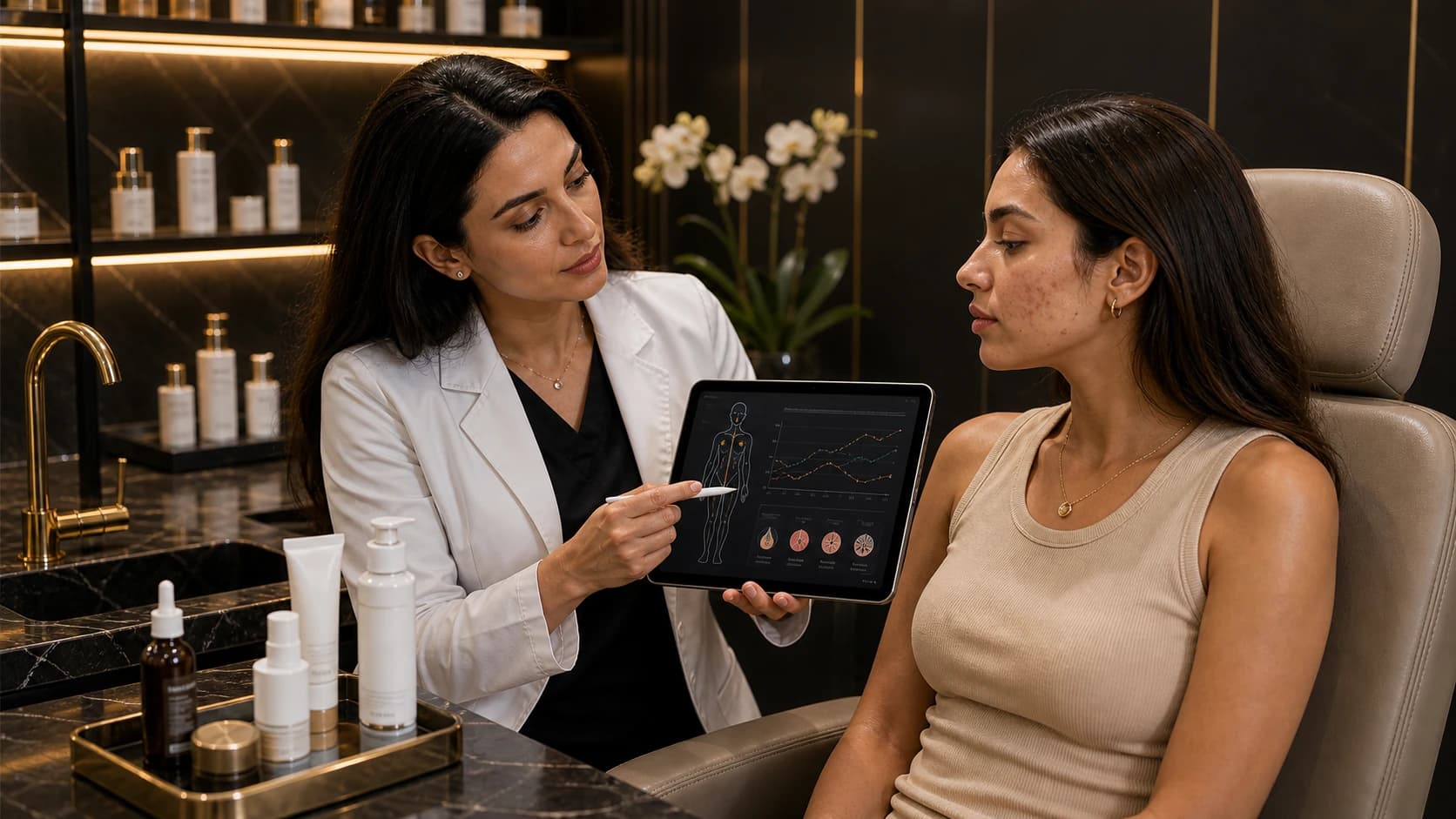
A dermatologist will review your history and pattern and, where appropriate, may recommend hormonal profile testing to look for contributing factors. Treatment is personalised and may combine: Dermatologist-prescribed topical or oral therapy A supportive, non-irritating skincare routine In-clinic treatments such as chemical peels for congestion and marks Management of underlying triggers where identified See our acne treatment approach. Hormonal acne can take time to settle, and individual results vary.
Can skincare alone fix hormonal acne?
Skincare helps manage the skin and prevent irritation, but because hormonal acne is driven internally, a good routine usually works best alongside medical treatment rather than instead of it. Aggressive "spot-fixing" tends to disappoint and can irritate the skin.
When should you see a doctor?
If your acne is cyclical, deep, persistent, or accompanied by other symptoms (such as irregular periods or excess hair growth), it's worth a proper assessment — both to treat the skin and to check for any underlying cause.