
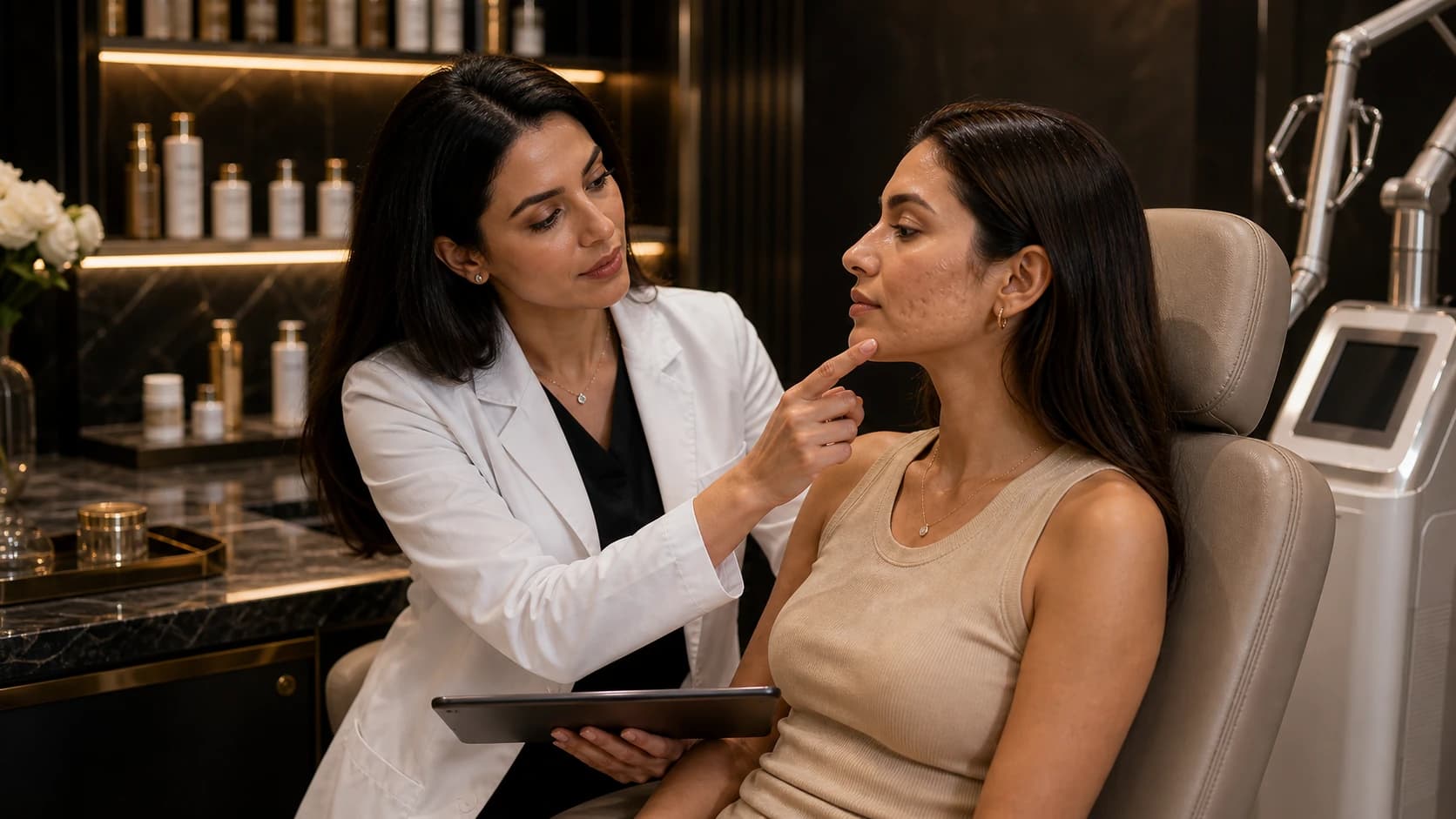
How to Treat Acne Scars: Subcision, Microneedling, Laser and PRP
Acne scars are treatable with the right combination. A dermatologist explains subcision, RF microneedling, laser and PRP — and how they're chosen.
By Endless Beauty ClinicJune 7, 20264 min read
Acne scars can be significantly improved, but no single treatment fixes every scar — the best results come from combining techniques matched to your specific scar types. Because most people have a mix of scars, an experienced, dermatologist-led plan that layers methods over time tends to outperform any one "miracle" device. Here's how the main treatments work and how they're chosen.
deeper support structure. The result is usually a mix of scar types — rolling, boxcar and icepick — each with different shapes and depths, plus sometimes leftover marks (which are pigmentation, not true scars). Because they're not all the same, they don't all respond to the same treatment — which is why assessment comes first.
Subcision releases the tethered bands that pull rolling scars down from beneath the skin. Consultant dermatologist Dr. Barikbin specialises in minimally invasive subcision techniques. RF microneedling stimulates collagen remodelling to improve texture and shallower scars. Laser resurfacing / scar-remodelling protocols (e.g. Fotona) help refine surface and texture. PRP uses your own growth factors to support skin regeneration, often combined with microneedling. These are frequently used together across a course of sessions.
What You Will Learn
Why are acne scars so hard to treat? Scarring forms when inflammation damages the skin's
Acne scars are treatable with the right combination. A dermatologist explains subcision, RF microneedling, laser and PRP — and how they're chosen.
The main treatments, and what each does
Acne scars are treatable with the right combination. A dermatologist explains subcision, RF microneedling, laser and PRP — and how they're chosen.
How is a treatment plan chosen? Your dermatologist first identifies your scar types and skin
Acne scars are treatable with the right combination. A dermatologist explains subcision, RF microneedling, laser and PRP — and how they're chosen.
What results are realistic? The honest answer is meaningful improvement, not complete
Acne scars are treatable with the right combination. A dermatologist explains subcision, RF microneedling, laser and PRP — and how they're chosen.
Key Benefits
Why are acne scars so hard to treat? Scarring forms when inflammation damages the skin's
Acne scars are treatable with the right combination. A dermatologist explains subcision, RF microneedling, laser and PRP — and how they're chosen.
The main treatments, and what each does
Acne scars are treatable with the right combination. A dermatologist explains subcision, RF microneedling, laser and PRP — and how they're chosen.
How is a treatment plan chosen? Your dermatologist first identifies your scar types and skin
Acne scars are treatable with the right combination. A dermatologist explains subcision, RF microneedling, laser and PRP — and how they're chosen.
What results are realistic? The honest answer is meaningful improvement, not complete
Acne scars are treatable with the right combination. A dermatologist explains subcision, RF microneedling, laser and PRP — and how they're chosen.
“
Acne scars are treatable with the right combination
Endless Beauty Clinic
Why are acne scars so hard to treat? Scarring forms when inflammation damages the skin's
The main treatments, and what each does
How is a treatment plan chosen? Your dermatologist first identifies your scar types and skin
tone, then sequences treatments accordingly — for example, subcision for tethered rolling scars, microneedling or laser for texture, and PRP to support healing. On darker skin, settings are kept conservative to avoid triggering pigmentation. The plan is staged over time, letting the skin remodel between sessions. See our full acne scar treatment approach.
What results are realistic? The honest answer is meaningful improvement, not complete
erasure. Scars can be made substantially less visible and the skin's texture smoother, but expecting perfectly scar-free skin sets you up for disappointment. Results develop gradually over months as collagen remodels, and individual results vary. Treating any active acne and protecting from the sun are part of the plan.
Should you treat scars or active acne first? Generally, active acne is brought under control
first — otherwise new breakouts can create new scars. Once the skin is settled, scar treatment begins. Leftover dark marks (post-inflammatory pigmentation) are also addressed, often separately, as they're pigment rather than true scars.
Frequently Asked Questions
Is this Skin Health & Dermatology guide a substitute for medical advice?
No. This article is educational, and suitability for any treatment should be reviewed during a private consultation.
How do I choose the right treatment option?
The right option depends on your skin, goals, medical history, anatomy, and expectations.
Are results the same for everyone?
No. Results, recovery, and the number of sessions vary from person to person.
How can I book a consultation?
Use the consultation button on this page and the clinic team will help coordinate your visit.
Ready to Refresh Your Look?
Book your consultation today and take the first step towards more confident you.