
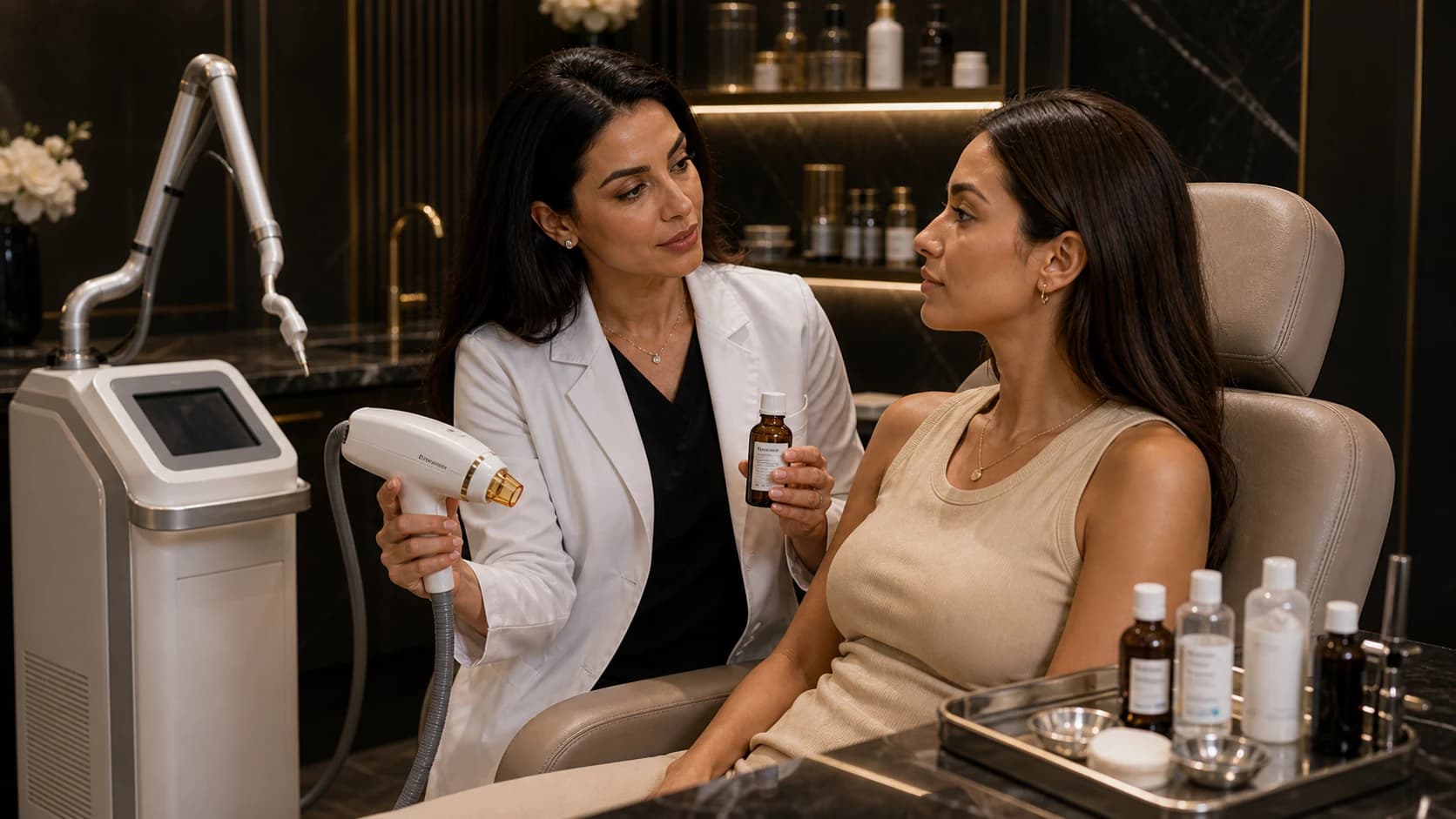
How does a chemical peel treat pigmentation?
A medical-grade chemical peel uses a controlled solution to exfoliate the upper layers of skin and encourage renewal, which can gradually fade surface pigmentation and improve tone. Peels come in different strengths, so they can be tailored — starting light and building up. They tend to be a flexible, lower-cost entry point and are often used in a series.
How does laser treat pigmentation?
Laser and light-based treatments target pigment more directly, delivering energy that breaks it down so the body can clear it. Devices such as Q-switched lasers (e.g. Hollywood Spectra) can be effective for certain pigmentation, but settings must be matched carefully to your skin — particularly on darker tones, where the wrong settings can worsen pigment.
Which is better for your situation?
A useful way to think about it:
- Type of pigmentation: defined sun spots may respond well to targeted laser; melasma usually does better with conservative peels and topicals, as laser can aggravate it.
- Skin tone: darker skin often does better starting with gentle peels and cautious protocols; aggressive laser carries more risk.
- Depth: surface pigment responds more readily; deeper pigment is slower and may need a combined plan.
- Tolerance and downtime: peels can involve some flaking; laser varies by device. This is why diagnosis comes first — the same label ("pigmentation") covers very different conditions.
Is it ever both?
Often, yes. Many effective plans combine a topical pigment-control routine, a course of peels, and selectively-used laser, layered over time with strict sun protection. Combining gradually usually beats relying on one aggressive treatment — especially in Dubai's climate, where heat and UV can undo progress. See our pigmentation and melasma treatment options. Individual results vary.