
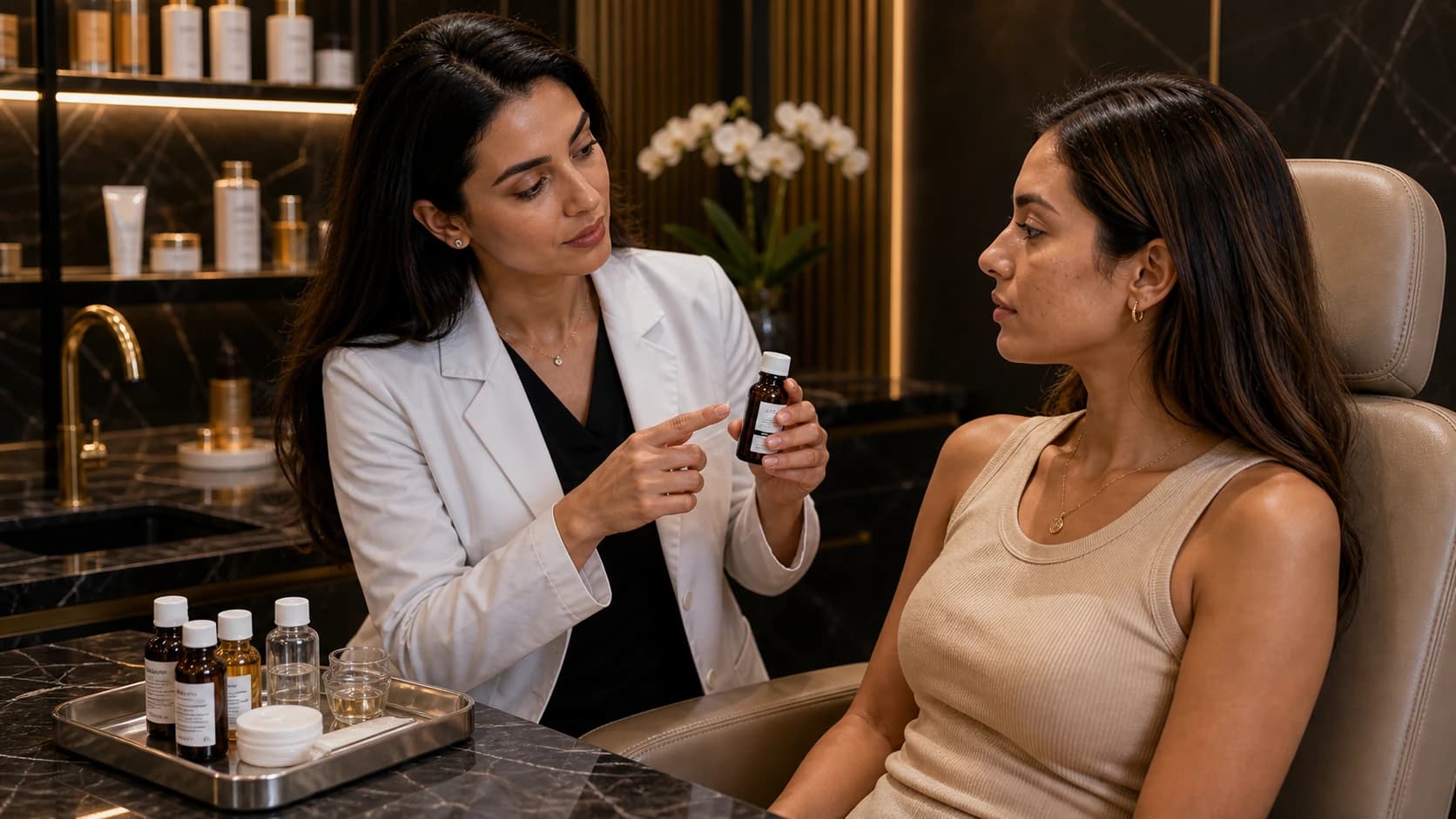
How does a chemical peel work?
A peel applies an exfoliating solution that loosens and removes the upper layers of skin, prompting the skin to renew itself. As fresher skin comes through, tone looks more even, texture smoother and the complexion brighter. The specific solution and strength are chosen to match your goal — gentle brightening at one end, more significant resurfacing at the other.
What can peels treat?
Medical peels are versatile and may help with: Dull, uneven or congested skin Acne-prone skin and congestion Pigmentation and uneven tone (as part of a wider plan) Fine texture and general radiance They're often used in a series and combined with a home-care routine. For pigmentation, especially melasma, peels are usually kept gentle and gradual. Individual results vary.
Superficial, medium or deep — what's the difference?
Peels are broadly grouped by how deeply they work. Lighter (superficial) peels freshen and brighten with little downtime and suit regular use. Stronger peels work deeper for more significant texture or resurfacing, with more downtime and more aftercare. Your dermatologist chooses the depth based on your concern, skin type and how much downtime you can manage — starting conservatively, especially on darker skin.
Is there downtime?
It depends on the peel. Lighter peels may cause mild tingling and minimal visible flaking; stronger peels can cause more noticeable peeling over several days. Diligent sun protection afterwards is essential in Dubai's climate — both to protect results and to prevent posttreatment pigmentation. Your clinician will tell you what to expect before you book.
Who should be cautious?
Peels can be adapted for many skin types, but darker skin tones need a careful, conservative approach to avoid triggering pigmentation, and certain skin conditions or recent treatments may mean waiting. This is exactly why medical peels are assessed and supervised rather than bought off a shelf. See our chemical peels page or book an appointment.