
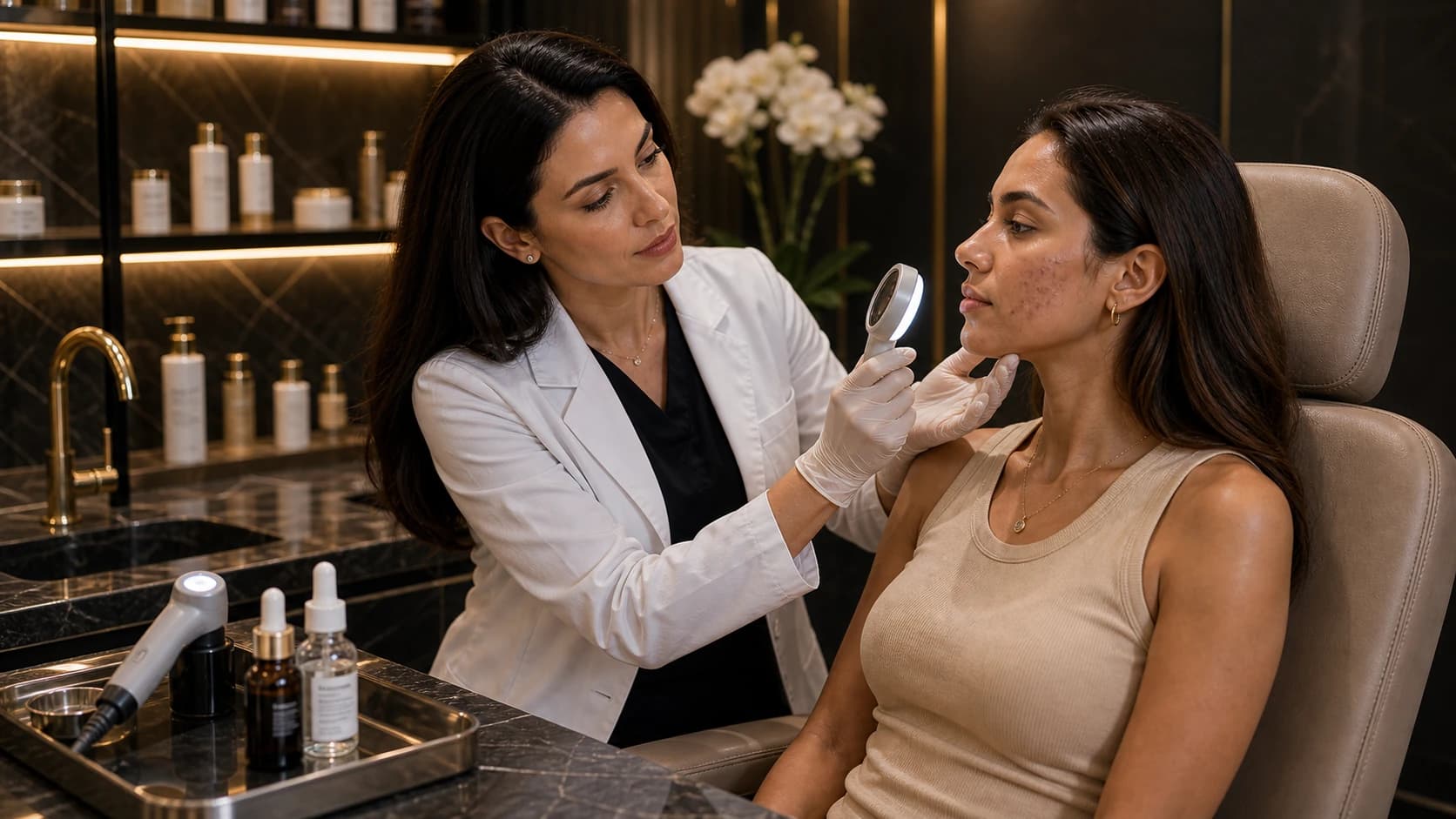
Skin Health & Dermatology

Post-Inflammatory Hyperpigmentation (PIH): Dark Marks After Acne

Dark marks after acne are usually PIH, not scars. A dermatologist explains why they happen, how to fade them, and how to prevent new ones in Dubai.

Those flat brown or dark marks left behind after a spot heals are usually post-inflammatory hyperpigmentation (PIH) — not true scars. They're a colour change rather than a textural one, which means they often fade over time and respond well to pigment-control and sun protection. The catch in Dubai: UV and heat can make them darker and slower to clear. Here's how to treat and prevent them.

inflammation — such as acne, irritation or injury. Crucially, it's a flat mark, not a textural scar: run your finger over it and the skin is smooth. This matters because PIH is generally easier to improve than true acne scars, and it's treated with pigment-focused (not resurfacing) methods.

more pigment in response to inflammation, so PIH is more common and can linger longer on Fitzpatrick types IV–VI. Dubai's UV and heat compound the problem by keeping the skin in a pigment-prone state. This is also why aggressive treatment is risky — over-treating can cause more PIH, the opposite of what you want.

What You Will Learn

What is PIH, and is it a scar? PIH is excess pigment the skin produces in response to

Dark marks after acne are usually PIH, not scars. A dermatologist explains why they happen, how to fade them, and how to prevent new ones in Dubai.

Why is PIH so common — and stubborn — in darker skin? Richer skin tones produce

Dark marks after acne are usually PIH, not scars. A dermatologist explains why they happen, how to fade them, and how to prevent new ones in Dubai.

How do you fade PIH? A gentle, consistent, pigment-focused approach works best:

Dark marks after acne are usually PIH, not scars. A dermatologist explains why they happen, how to fade them, and how to prevent new ones in Dubai.

How do you prevent PIH in the first place? Prevention beats treatment: don't pick or

Dark marks after acne are usually PIH, not scars. A dermatologist explains why they happen, how to fade them, and how to prevent new ones in Dubai.

Key Benefits

What is PIH, and is it a scar? PIH is excess pigment the skin produces in response to

Dark marks after acne are usually PIH, not scars. A dermatologist explains why they happen, how to fade them, and how to prevent new ones in Dubai.

Why is PIH so common — and stubborn — in darker skin? Richer skin tones produce

Dark marks after acne are usually PIH, not scars. A dermatologist explains why they happen, how to fade them, and how to prevent new ones in Dubai.

How do you fade PIH? A gentle, consistent, pigment-focused approach works best:

Dark marks after acne are usually PIH, not scars. A dermatologist explains why they happen, how to fade them, and how to prevent new ones in Dubai.

How do you prevent PIH in the first place? Prevention beats treatment: don't pick or

Dark marks after acne are usually PIH, not scars. A dermatologist explains why they happen, how to fade them, and how to prevent new ones in Dubai.

Woman applying sunscreen in Dubai sunshine
Dark marks after acne are usually PIH, not scars

Endless Beauty Clinic

What is PIH, and is it a scar? PIH is excess pigment the skin produces in response to

Why is PIH so common — and stubborn — in darker skin? Richer skin tones produce

How do you fade PIH? A gentle, consistent, pigment-focused approach works best:

Treat the cause first — control active acne or irritation, or new marks keep forming Daily sun protection — the single biggest factor in how fast PIH fades Dermatologist-guided topical pigment-control Gentle chemical peels where appropriate Patience — PIH fades gradually over weeks to months See our pigmentation and melasma treatment approach. Individual results vary.

How do you prevent PIH in the first place? Prevention beats treatment: don't pick or

squeeze spots (this drives inflammation and PIH), treat acne and irritation early, avoid harsh DIY treatments, and protect from the sun daily. For acne-prone darker skin especially, gentle, consistent care prevents the marks that are then slow to fade.

When should you see a dermatologist? If marks are widespread, slow to fade, or you're not

sure whether they're PIH or scars, an assessment clarifies it and sets the right plan — and helps you avoid treatments that could worsen pigmentation. Getting the diagnosis right (marks vs scars) saves time and money.

Frequently Asked Questions

Is this Skin Health & Dermatology guide a substitute for medical advice?

No. This article is educational, and suitability for any treatment should be reviewed during a private consultation.

How do I choose the right treatment option?

The right option depends on your skin, goals, medical history, anatomy, and expectations.

Are results the same for everyone?

No. Results, recovery, and the number of sessions vary from person to person.

How can I book a consultation?

Use the consultation button on this page and the clinic team will help coordinate your visit.

Ready to Refresh Your Look?

Book your consultation today and take the first step towards more confident you.

Book Your Consultation