
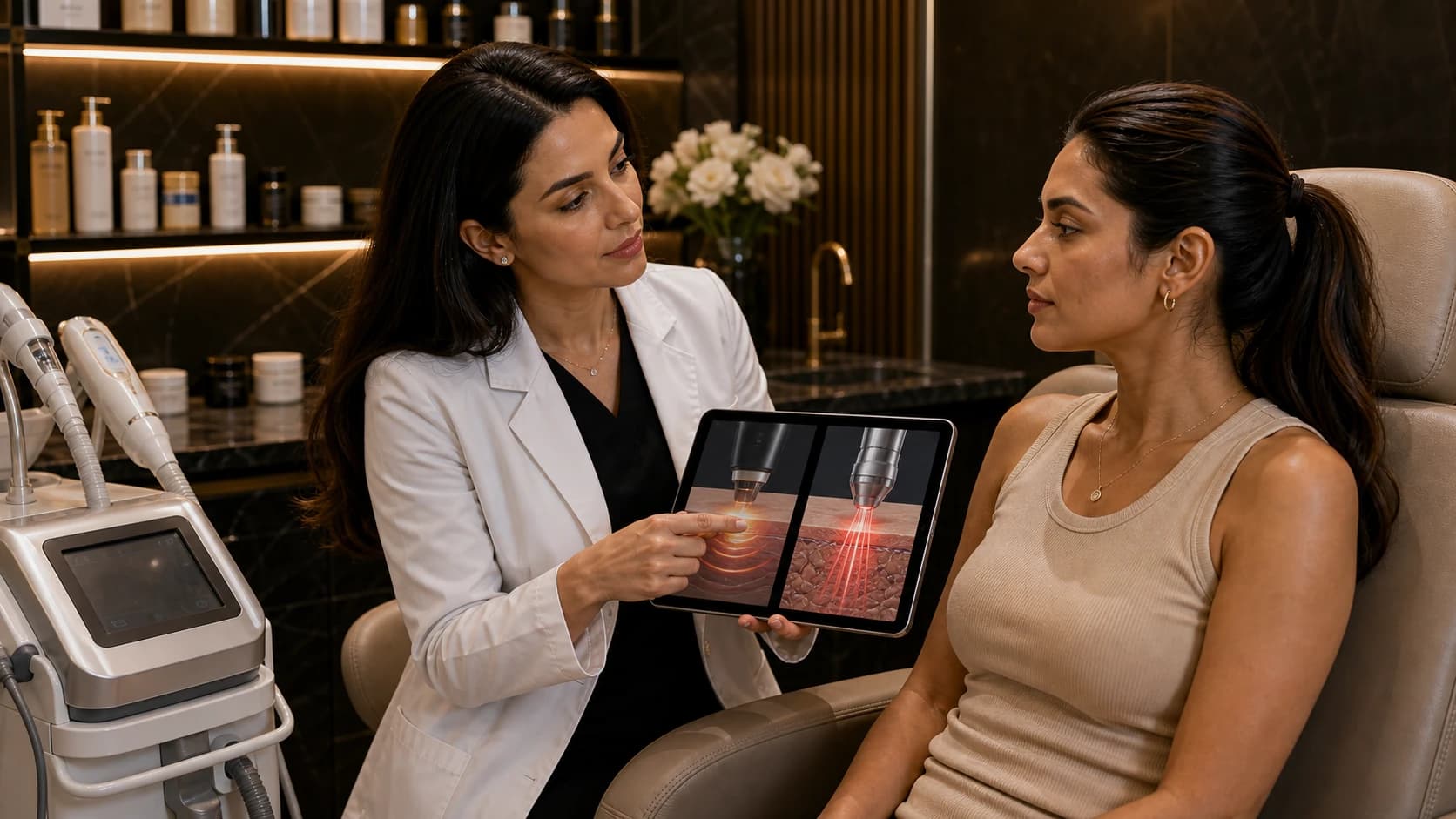
How does non-surgical skin tightening actually work?
Both treatments deliver controlled energy into the skin to create a healing response that remodels and builds collagen over the following weeks and months. That gradual collagen-building is what supports firmer, smoother-looking skin. Because it relies on your body's own response, results develop over time rather than appearing overnight — and a course of sessions is usual.
How does RF microneedling work?
RF microneedling combines tiny needles (which create micro-channels and stimulate repair) with radiofrequency energy delivered at a precise depth. It's versatile — useful for tightening, texture, pores and scars — and works across a range of skin types, which makes it a popular choice locally.
How does laser skin tightening work?
Laser tightening (for example Fotona 4D/7D protocols) uses laser energy to heat and stimulate the skin's deeper layers, encouraging collagen contraction and renewal. Some laser protocols also address tone and texture at the same time, and many are comfortable with minimal downtime.
Which one is right for you?
A few pointers, always confirmed at assessment: For texture, pores and scars alongside tightening: RF microneedling is often a strong allrounder. For overall facial firming and a "lift" feel: laser protocols like
- Fotona 7D may be favoured. Skin tone: both can be tailored, but settings are chosen carefully on darker skin.
- Combination: the two are sometimes used together within a plan. See our skin tightening page. Individual results vary.
Who isn't a good candidate?
Non-surgical tightening works best for mild-to-moderate laxity. If you have significant sagging, your clinician should tell you honestly that a non-surgical treatment may underdeliver, and discuss whether a surgical option would suit your goals better. Managing expectations is part of good care.