
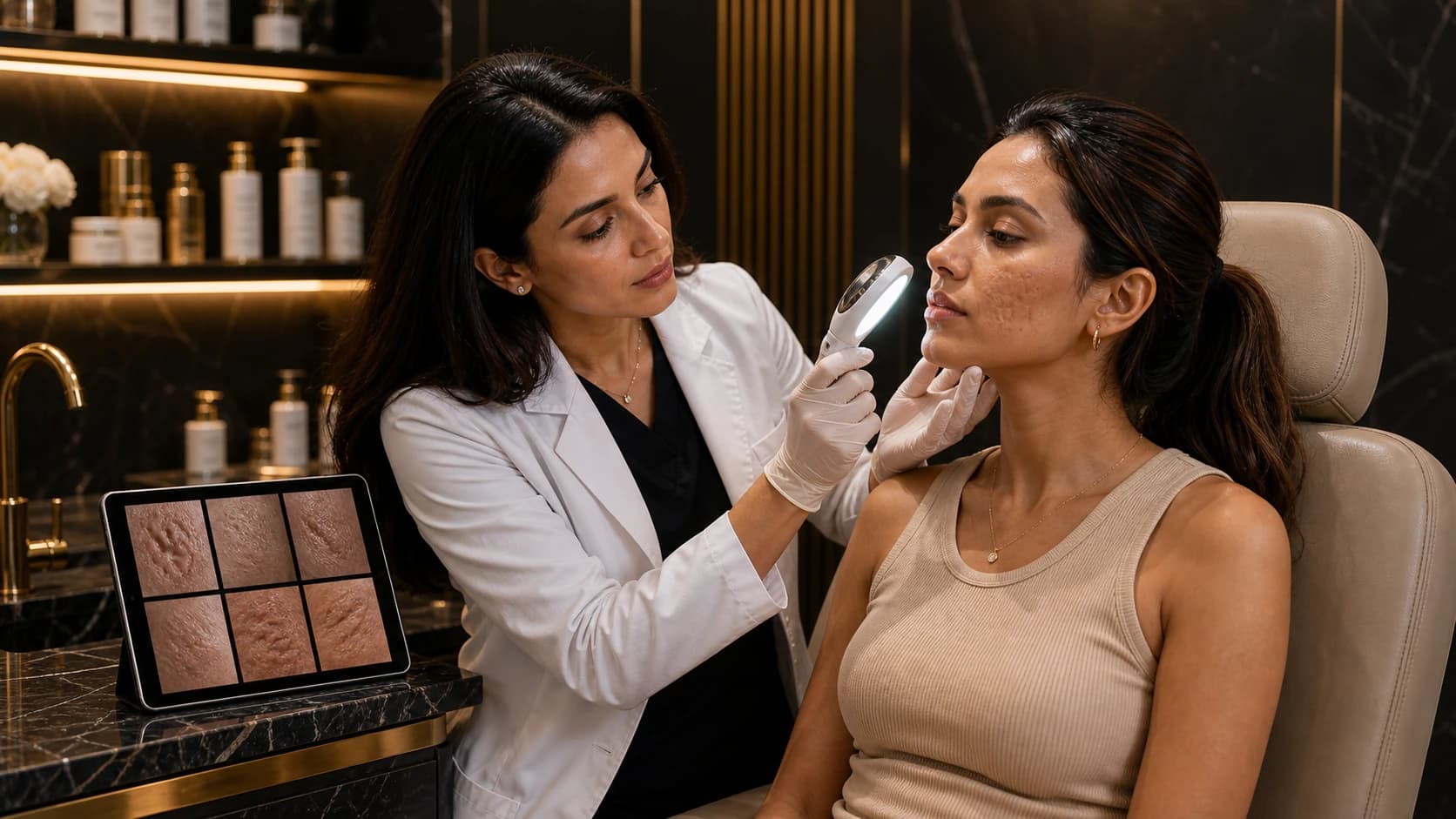
Are they scars or marks?
This distinction matters before anything else. Marks are flat — red (post-inflammatory erythema) or brown (post-inflammatory hyperpigmentation) — and represent colour changes that often fade with time, sun protection and pigment-control. Scars are textural changes in the skin's surface that won't simply fade and need treatments that remodel the skin. Confusing the two leads to the wrong treatment and disappointment.
The main types of true (atrophic) acne scars
- Rolling scars— broad, shallow depressions with sloping edges, caused by tethering bands beneath the skin. Often respond well to subcision plus collagen-stimulating treatments.
- Boxcar scars— wider depressions with sharper, defined edges. May respond to
- RF microneedling and laser resurfacing. Icepick scars— narrow, deep, pitted scars. Among the most challenging; may need specific techniques and a combination approach. Most people have a mix, which is why plans are layered rather than one-size-fits-all.
Which treatment suits each scar type?
In general terms (always personalised after assessment): Rolling → subcision + RF microneedling / PRP Boxcar → RF microneedling + laser resurfacing (Fotona) Icepick → targeted techniques, often combined, over a longer course Dark/red marks → pigment-control, peels and sun protection (see pigmentation) Your dermatologist matches the method to your scar types and skin tone.
Why does identifying the type matter so much?
Because using the wrong treatment wastes time and money — and, on darker skin, an overly aggressive choice can add pigmentation. A proper assessment (often under good lighting, sometimes with skin analysis) lets your dermatologist build a sequenced plan that addresses each scar type appropriately. Our full approach is on the acne scar treatment page. Results develop gradually and individual results vary.