
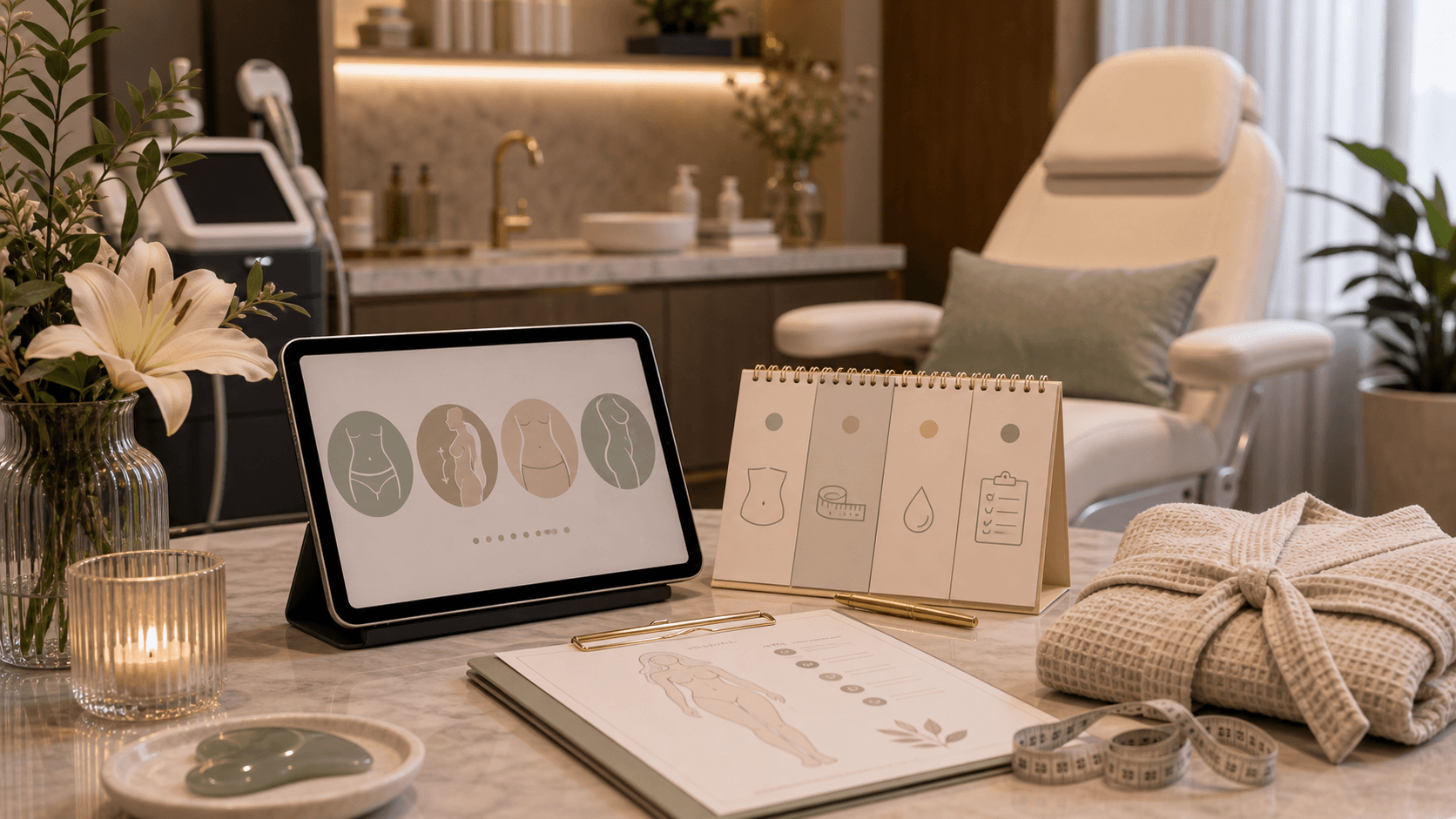
Why does loose skin happen after weight loss?
When you gain weight, skin stretches; after major weight loss, the skin often can't fully retract — especially after significant or rapid loss, or bariatric surgery — leaving folds of excess skin on the abdomen, arms, thighs, chest or elsewhere. This isn't a failure of effort or skincare; it's how skin behaves after substantial stretching. It can cause physical issues (chafing, hygiene, discomfort) as well as affecting how you feel about your body.
What can body contouring do?
Body-contouring procedures remove or reposition excess skin (and sometimes residual fat) to create a smoother, firmer contour. Depending on the area, this may involve procedures addressing the abdomen, arms, thighs, chest or body — tailored to where your excess skin is. The goal is to address what non-surgical options can't: significant excess skin genuinely requires surgery. See our body contouring information; procedures are performed by a licensed plastic surgeon.
Timing matters: when is the right time?
This is important: body contouring is generally best considered once your weight is stable and has been for a period, and (after bariatric surgery) once your weight loss has plateaued and your nutrition is stable. Operating too early — while you're still losing — can compromise results. Your surgeon will advise on the right timing for you, which is part of why this is a planned, staged decision rather than a rushed one.
What to expect: it's significant surgery Body-contouring procedures are often more
significant surgery than smaller cosmetic procedures, involving longer operations (sometimes staged), scarring (a real trade-off — removing excess skin leaves scars, which your surgeon will discuss and place as discreetly as possible), and a meaningful recovery period. This is a serious decision with serious considerations — but for the right person, addressing excess skin can be genuinely worthwhile. Honesty about scars and recovery is essential. (See recovering after surgery.)
Is it right for you?
It may suit people who've achieved significant, stable weight loss, are in good health and nutritionally stable, bothered by excess skin (physically or otherwise), and who understand the trade-offs (including scarring) with realistic expectations. A thorough appointment with a licensed plastic surgeon assesses your situation, the right procedures and timing, and whether it's appropriate for you. It's a personal decision, made unhurried and fully informed. Individual results vary.