
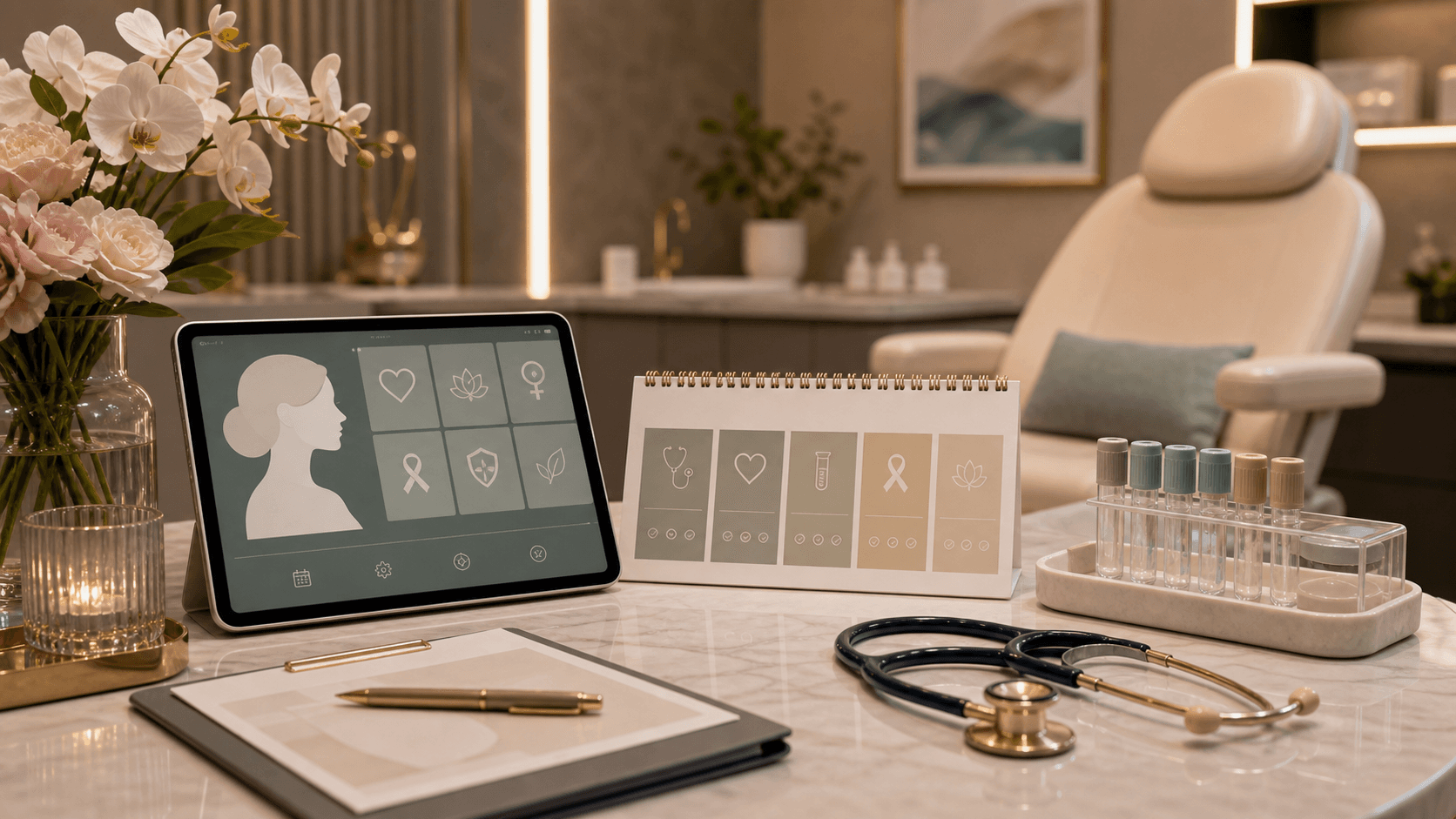
What is women's health screening?
It's a set of preventative checks tailored to women's health — designed to detect potential issues early (often before symptoms appear) and to monitor your wellbeing over time. Rather than waiting for a problem, screening looks ahead. Exactly what's appropriate depends on your age, personal and family history, and any risk factors, which is why it's personalised.
Why is it so important?
The core reason is simple: many health conditions are far easier to manage when found early. Screening can identify changes before they cause symptoms, allowing earlier, often simpler intervention — and where everything is normal, it offers genuine reassurance. Prevention and early detection consistently lead to better outcomes than waiting until something is wrong.
What can screening include?
Depending on your age and history, women's health checks may involve: Cervical screening (Pap smear / HPV testing) Breast health assessment and guidance Pelvic examination as appropriate Relevant blood tests and hormonal checks General health markers and lifestyle review Your specialist recommends what's appropriate for you. See our women's health screening services.
How often should you be screened?
Frequency depends on the specific check, your age and your risk factors — some screenings are done at set intervals, others as guided by your history. Rather than a one-size-fits-all rule, your specialist will recommend a schedule tailored to you. The key is consistency: keeping up with the recommended intervals is what makes screening effective.
Making screening comfortable and confidential
Some women delay screening because they feel anxious or uncomfortable about it — which is understandable, and exactly why a respectful, unhurried, confidential approach matters. Being able to discuss concerns in your own language helps too (Dr. Assadi consults in English, Persian, Turkish and Azari). The goal is to make looking after your health straightforward and stress-free. All appointments are confidential.