
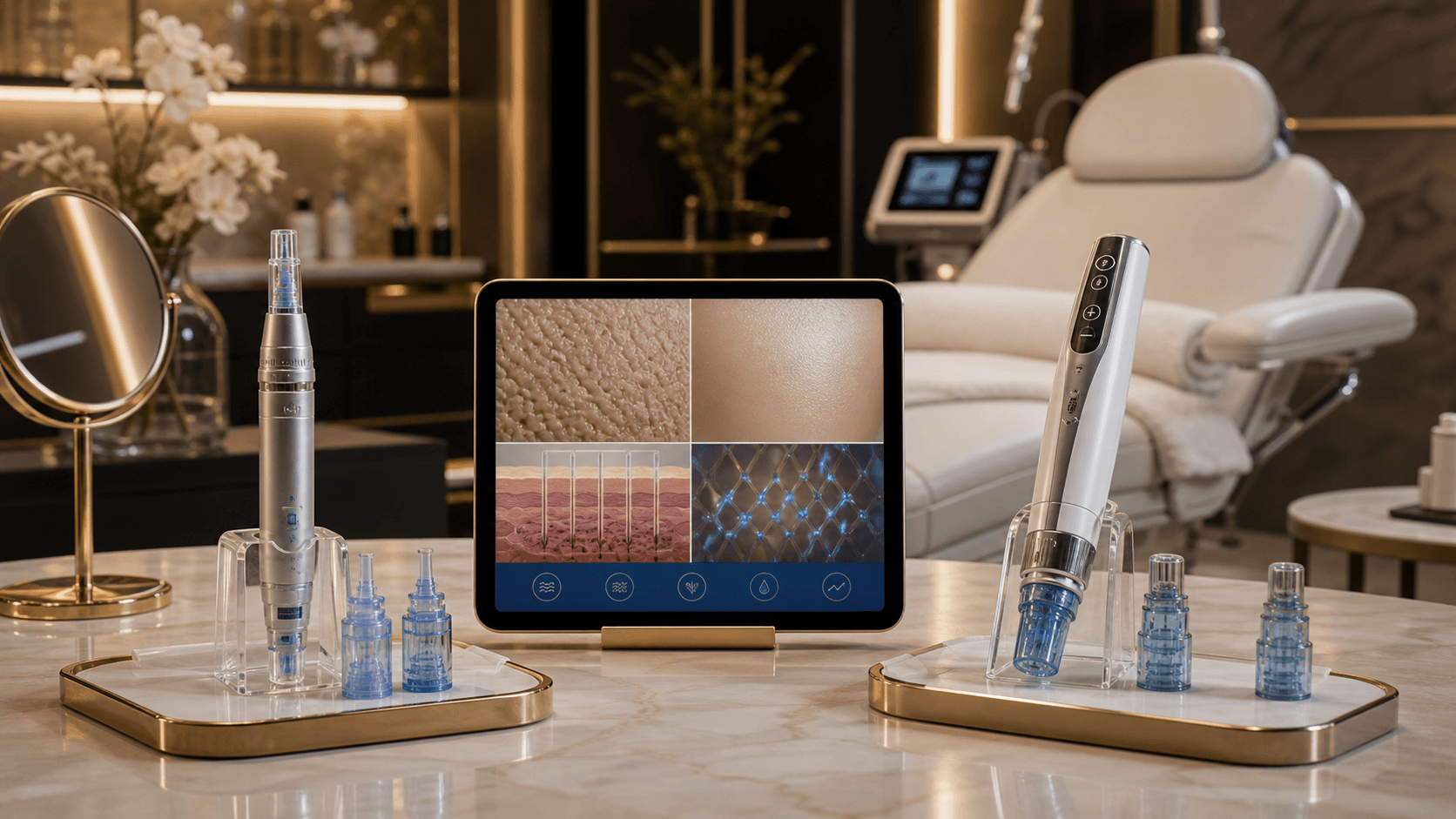
What does microneedling do?
Microneedling uses fine needles to create controlled microchannels in the skin, triggering its natural repair response and stimulating collagen. It's effective for texture, overall skin quality, fine lines and some scarring, and it can also help skincare products penetrate. It's a well-established collagen-induction treatment with a strong track record for skin quality.
What does RF microneedling add?
RF microneedling does everything microneedling does, plus delivers radiofrequency energy into the deeper skin at a precise depth. That added heat energy boosts collagen stimulation and gives it a greater effect on skin tightening and deeper textural concerns — so it tends to be the stronger choice when firming is a goal, not just surface texture.
The key difference, simply
Microneedling = needles only → great for texture and skin quality RF microneedling = needles plus radiofrequency → texture and more tightening/deeper effect Think of RF microneedling as microneedling "with an added dimension" for firmness and depth. Neither is universally better — it depends on what you're trying to achieve.
Which one do you need?
A simple way to frame it (confirmed at assessment): Mainly texture, skin quality, glow, fine lines → microneedling may be enough Texture and tightening / mild laxity / deeper concerns / certain scars → RF microneedling is often favoured Skin tone: both can be tailored across skin types with conservative settings on darker skin Both are often combined with PRP to support results Your clinician matches the treatment to your concern rather than defaulting to one.
What about downtime and results?
Both involve some redness and a warm, sunburn-like feeling for a day or so (RF microneedling can be slightly more, given the added energy). Both build results gradually over weeks as collagen forms, and both usually need a course. Diligent sun protection afterwards matters in Dubai. Individual results vary — your clinician sets realistic expectations for your skin and chosen treatment.