What is microblading?
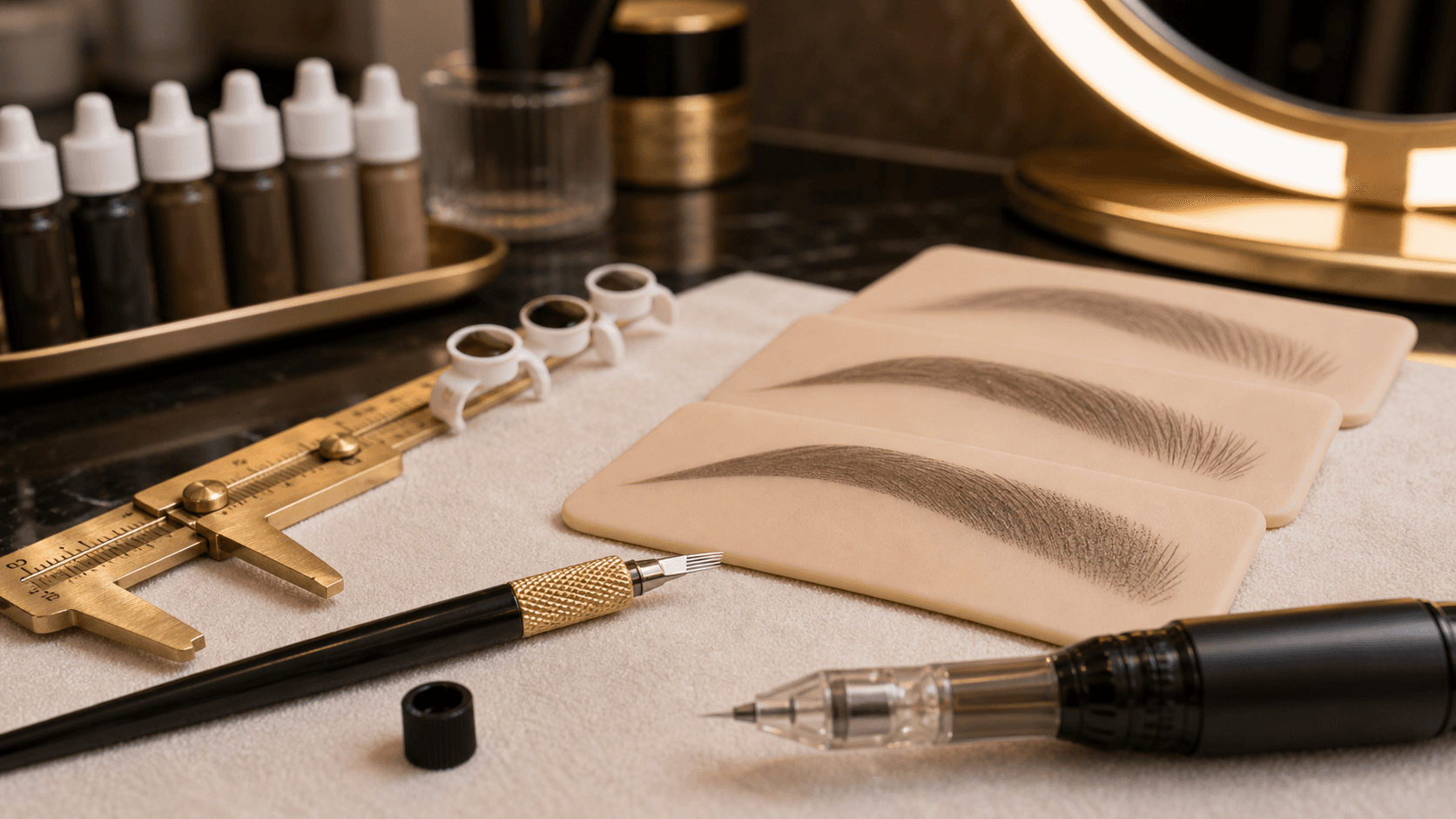
Microblading is a semi-permanent brow technique that uses a fine hand tool to deposit pigment in thin, hair-like strokes, mimicking natural brow hairs. Done well, it creates a natural-looking, defined brow — which is why it's so popular. It's a skilled, technique-dependent treatment, and the result depends heavily on the practitioner's artistry and on your skin. It's best for adding natural-looking definition.
Ombré / powder brows Ombré (or "powder") brows use a different technique to create a soft,
shaded, gradient finish — like a softly filled-in brow with makeup, often lighter at the front and more defined toward the tail. Rather than individual strokes, it's a diffuse, powdery look. Many people find it gives a polished, "made-up" brow, and — importantly — it often suits a wider range of skin types than microblading, including oilier skin.
Combination brows Combination brows do what the name suggests: blend hair-like strokes
(microblading) with shading (ombré) — for example, strokes at the front for natural texture and shading through the body and tail for definition. It can offer a natural-yet-defined result and is a popular middle ground. A skilled practitioner can tailor the balance to your brows and preference.
Why skin type matters (especially for microblading)
This is the key honest point: microblading isn't ideal for everyone. On oily or very oily skin, the fine hair-like strokes tend to blur and fade faster, so the crisp result doesn't hold as well — meaning ombré/powder or combination brows are often a better choice for oily skin. Your practitioner should assess your skin honestly and recommend the technique that will actually work for you, rather than defaulting to the most-hyped option. Results vary by skin type.
Which technique is right for you?
A simple guide (confirmed at appointment): Natural, hair-like definition + normal/dry skin → microblading may suit Oily skin, or wanting a soft "made-up" finish → ombré/powder brows often better Natural-yet-defined, or unsure → combination brows All cases → shape and colour tailored to your face, with realistic expectations The best technique is the one matched to your skin and goals — good advice beats trends.
What to expect
For any brow technique, expect: an appointment to agree shape and colour; the procedure (with numbing for comfort); a healing period where colour looks darker before softening; and a top-up session to perfect it. Colour matures over a few weeks. As with all SPMU, a qualified, hygienic practitioner and a patch test matter. (See aftercare and how long it lasts.)