
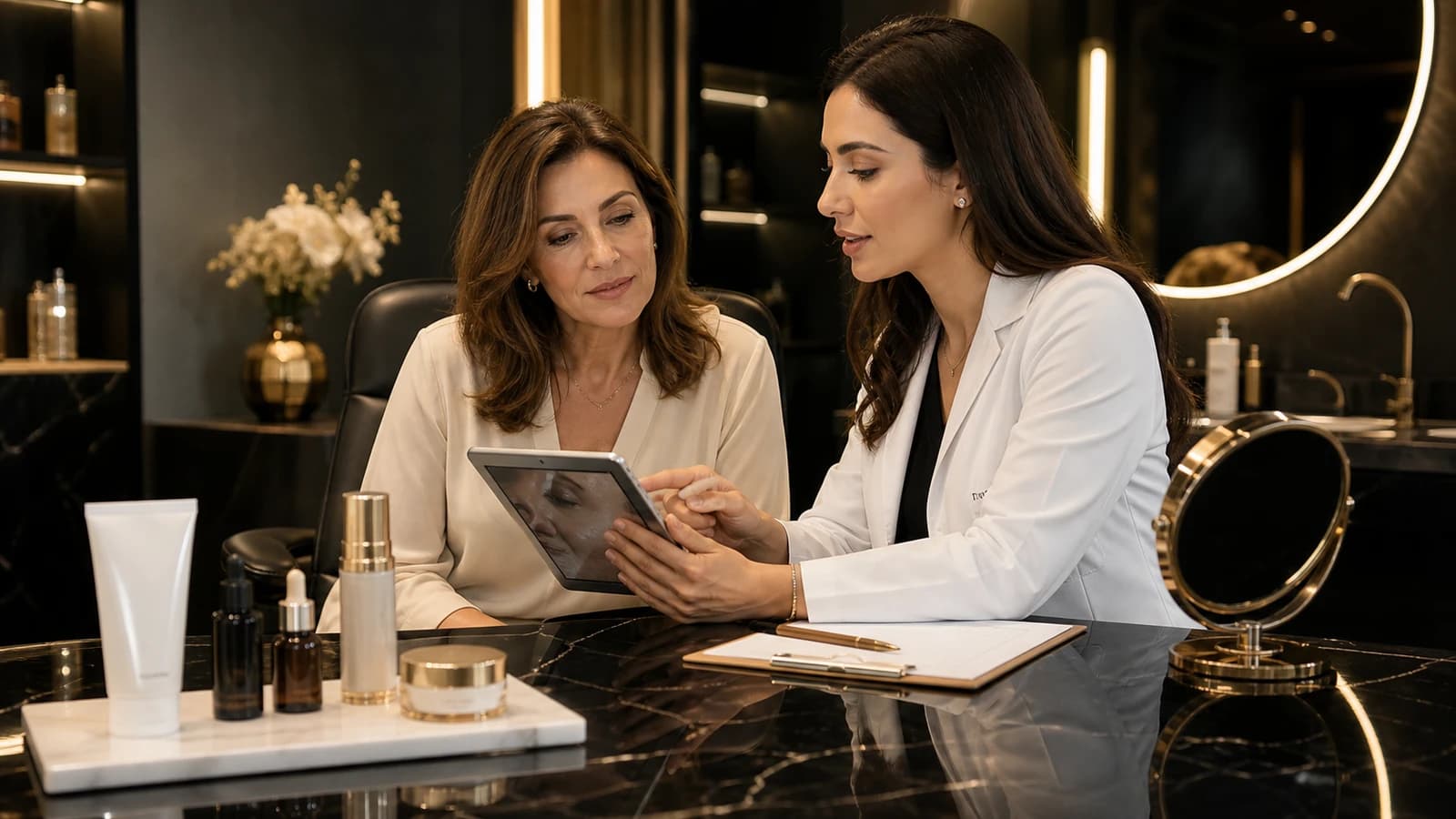
What actually causes skin aging?
Skin aging is part natural (genetics, time) and part environmental — and the environmental part is largely within your control. Sun exposure is the biggest external driver of wrinkles, pigmentation and loss of firmness, which is why protection matters so much. Lifestyle factors like sleep, diet, smoking and stress play a role too. Understanding this is why "prevention" beats "correction."
The core of an effective routine
You don't need many products — you need the right ones, used consistently:
- Morning: gentle cleanse → antioxidant (e.g. vitamin C) → moisturiser → broad-spectrum
- SPF (the non-negotiable). Evening: cleanse → a retinoid or other active suited to your skin (introduced gradually) → moisturiser. Introduce actives slowly to avoid irritation — over-doing it can damage the barrier and, in this climate, even trigger pigmentation. If unsure, a dermatologist can build a routine for your skin.
Which ingredients are worth it?
A few have solid evidence behind them: sunscreen (prevention), retinoids (texture, lines, cell turnover), antioxidants like vitamin C (environmental protection, brightness), and good hydration/barrier support. Many other "anti-aging" claims are marketing. The skill is consistency and correct use, not collecting products.
When do skincare and treatments work together?
Skincare maintains and protects; inclinic treatments do what creams can't. For volume and lines, injectables may help; for firmness and texture, skin tightening, RF microneedling or Fotona; for skin quality, skin boosters and PRP. The best results come from a plan that pairs a good routine with the right treatments — see our anti-aging treatments approach. Individual results vary.
When should you start?
There's no single right age — prevention (sun protection, antioxidants, a good barrier) is valuable early, while correction is added as needs change. The younger trend toward "preventative" care simply reflects that protecting skin now is easier than reversing damage later.