
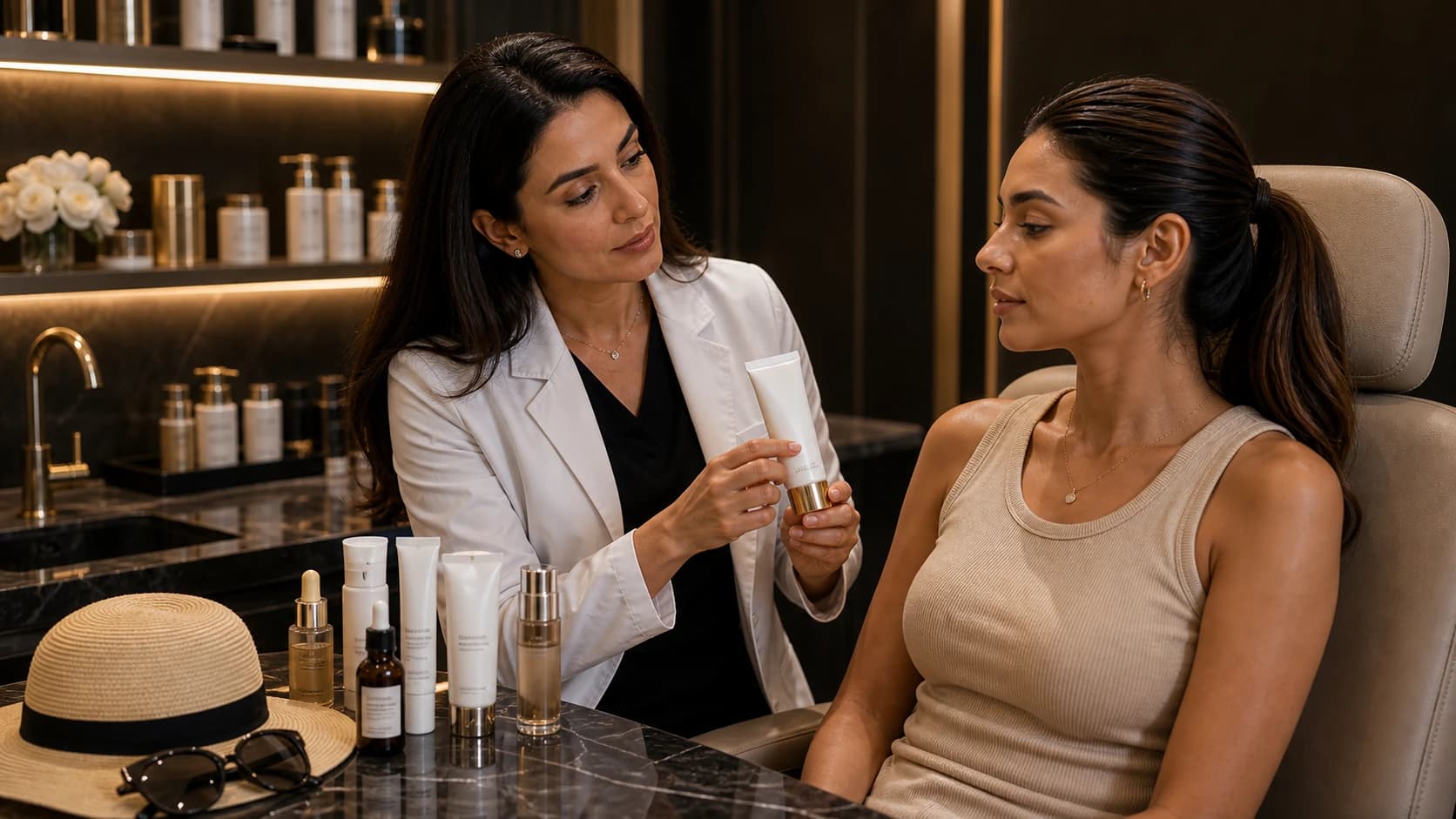
Why is sunscreen so important in Dubai specifically?
UV levels here are high for most of the year, and UV is the leading driver of pigmentation, melasma flares, sun spots and visible aging. Heat and visible light add to the load. Without daily protection, treatments for pigmentation and aging are working against a constant headwind — which is why dermatologists treat sunscreen as non-negotiable rather than optional.
How to choose a sunscreen
Look for: broad-spectrum (protects against UVA and UVB), a high SPF, and a texture you genuinely like — because the best sunscreen is the one you'll reapply. Those prone to pigmentation may benefit from formulas that also help shield against visible light. If you have sensitive or acne-prone skin, your dermatologist can suggest suitable options that won't aggravate it.
How to apply and reapply correctly
Most people under-apply, which dramatically reduces protection.
- Practical tips: Apply a generous amount to the face and any exposed skin every morning, as the last step before makeup. Reapply through the day — roughly every couple of hours of exposure, and after sweating or swimming.
- Don't forget commonly missed spots: ears, neck, hairline and the backs of the hands. Pair it with shade and a hat during peak midday sun.
Do darker skin tones need sunscreen?
Yes — absolutely. While richer skin tones have more natural protection, they are still very prone to pigmentation and melasma, which UV and heat worsen. For darker skin especially, daily sun protection is central to both preventing and treating pigmentation. Modern formulations are increasingly designed to avoid the white cast that put many people off in the past.
Sunscreen and your treatments
After most aesthetic and dermatology treatments — peels, laser, microneedling, pigmentation care — diligent sun protection is essential to protect your results and prevent post-treatment pigmentation. If you're investing in pigmentation, laser or anti-aging care, sunscreen is what makes it last.