
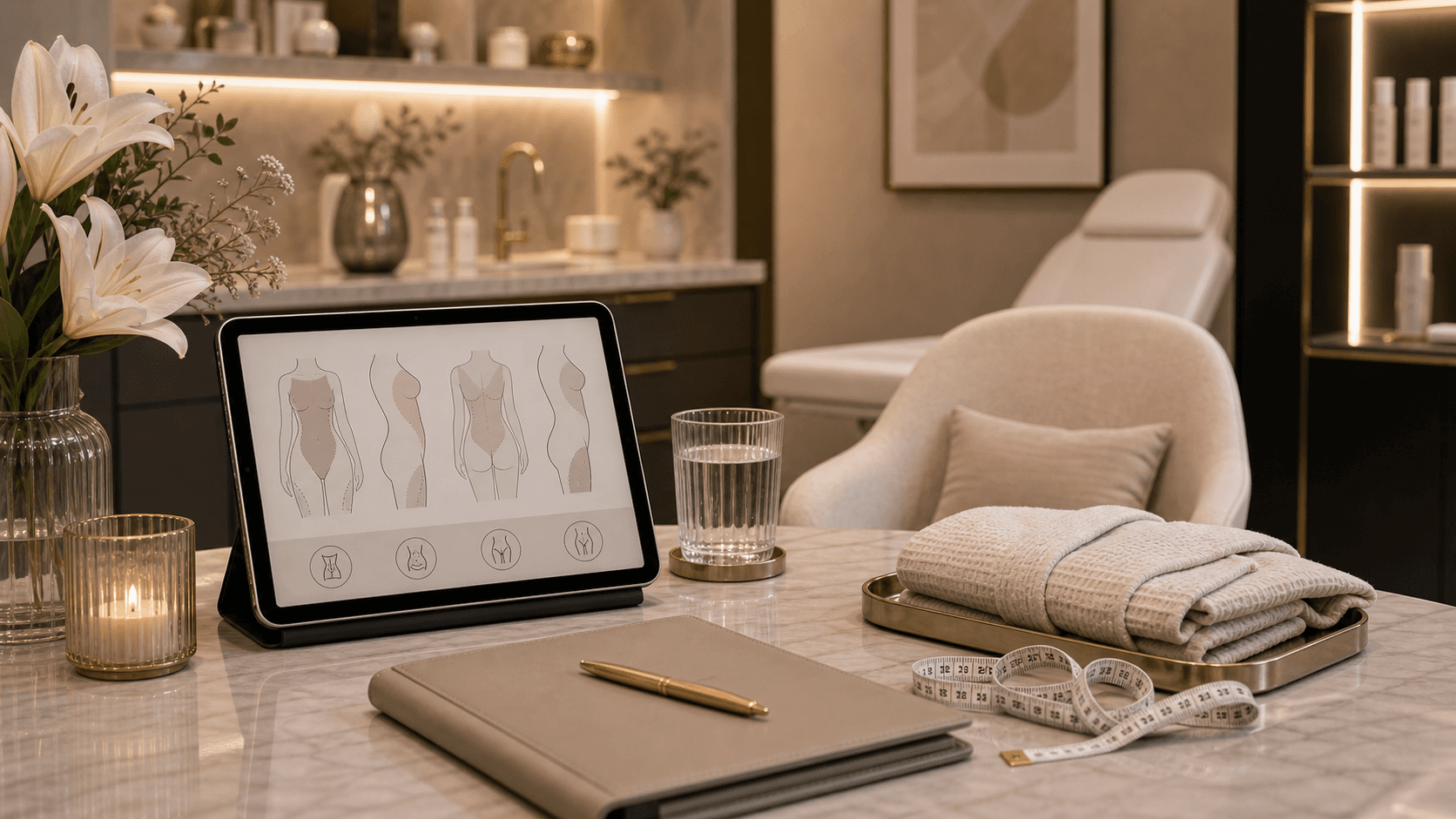
What liposuction actually does Liposuction removes localised pockets of fat from specific
areas to improve contour and shape — areas that resist diet and exercise. Think of it as a bodycontouring tool, not a weight-loss one: it reshapes a specific area rather than reducing your overall body weight significantly. It's surgery, performed by a licensed plastic surgeon, with anaesthesia and a recovery period. See our liposuction information.
What liposuction is NOT This is the part to read carefully.
Liposuction is not: A weight-loss method — it's not for significant overall weight reduction A substitute for diet and exercise — or a fix for an unhealthy lifestyle A treatment for obesity — it's for localised contouring, not large-volume fat reduction A cellulite or loose-skin fix — it addresses fat, not skin laxity (which may even need addressing separately) Permanent insurance against weight gain — gaining weight afterward changes results A responsible surgeon is clear about all of this upfront.
Who is a good candidate?
Liposuction tends to suit people who are near their target/stable weight, generally healthy, with specific stubborn fat pockets that don't respond to diet and exercise, and who have realistic expectations and reasonable skin quality. It's not the right tool for someone hoping to lose a lot of weight or substitute for lifestyle change — and a good surgeon will say so honestly rather than operate. Candidacy is assessed at appointment.
What about skin after fat removal?
An important, often-overlooked point: removing fat doesn't tighten skin. Depending on your skin quality and the area, skin may retract well — or laxity may become apparent, sometimes needing a separate approach (including skin-tightening or, in some cases, a different surgical procedure like body contouring after weight loss). Your surgeon should discuss your skin honestly as part of the plan, not just the fat.
Realistic results and recovery
Results are about improved contour and shape, settling over weeks to months as swelling resolves — not a dramatic number on the scale. Recovery involves downtime, swelling, bruising, wearing compression garments, and following aftercare. Results can be long-lasting if you maintain a stable weight, since remaining fat cells can still enlarge with weight gain. Realistic expectations and a healthy lifestyle afterward are part of a good outcome. Individual results vary.