
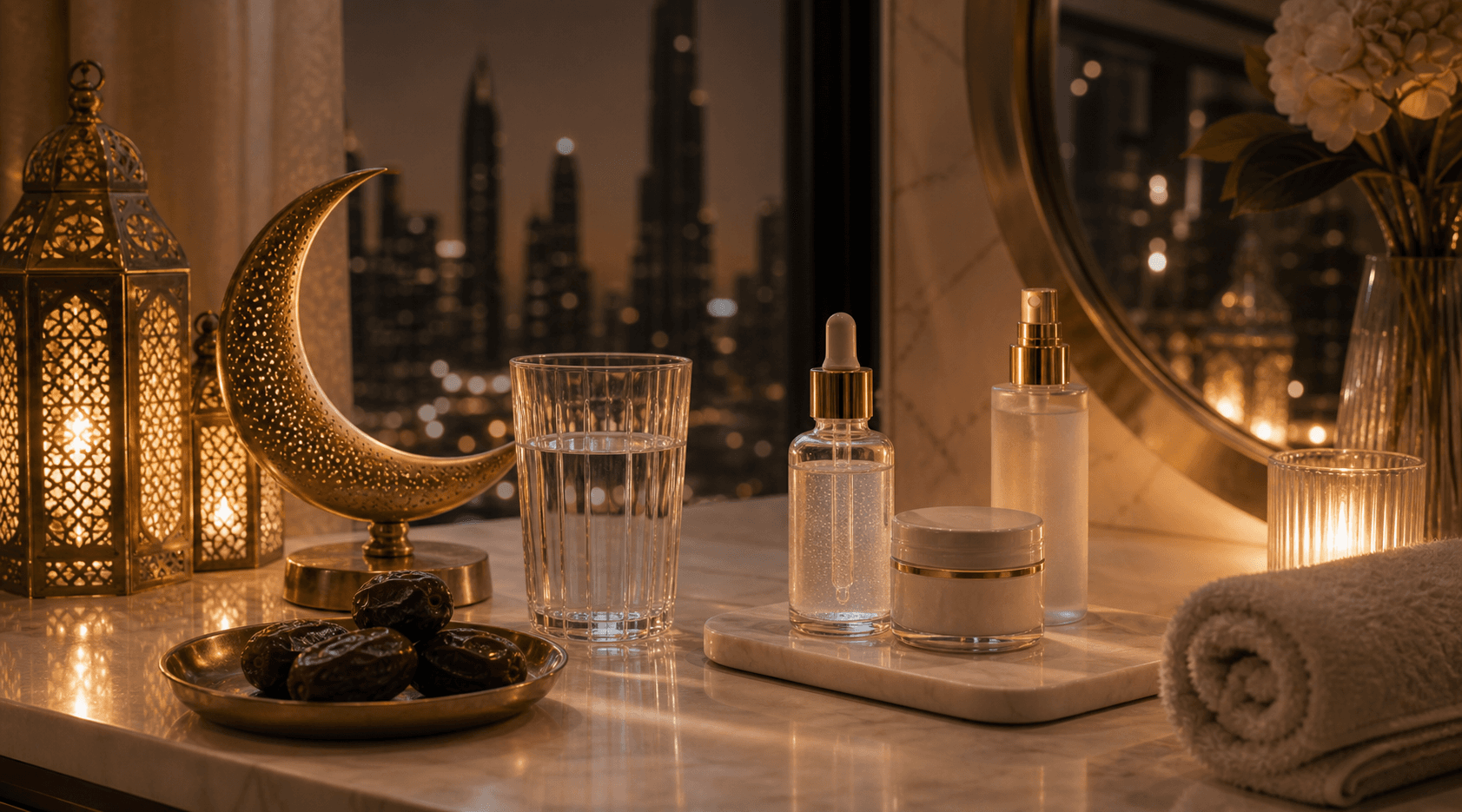
How can fasting affect your skin?
The main factor is hydration: with fluid intake concentrated into non-fasting hours, skin can become drier and look duller, and some people notice changes in oiliness or the odd breakout from shifts in routine, sleep and diet. None of this is harmful — it's a temporary reflection of the changed rhythm — and it's very manageable with a few mindful habits. Everyone's skin responds differently.
Hydration: make non-fasting hours count Since you can't sip water through the day, be
intentional during non-fasting hours:
- Drink enough water between iftar and suhoor— spread it out rather than all at once
- Hydrating foods— water-rich fruits and vegetables at iftar/suhoor Go easy on very salty, very sugary and excess caffeinated drinks, which can be dehydrating
- Support skin externally too— a good moisturiser helps hold hydration Internal hydration is the foundation of comfortable skin during the month.
A simple Ramadan skincare routine Keep it gentle and consistent:
Hydrating, barrier-supporting moisturiser morning and night Gentle cleansing — don't over-strip already-drier skin Daily sun protection as always (Dubai's sun doesn't pause) Ease off harsh actives if your skin is drier or more sensitive than usual A hydrating mask or facial can be a nice, gentle boost Simplicity suits a month when energy and routine shift.
Timing treatments around Ramadan
Many people prefer to plan treatments thoughtfully around the month: Gentle, no-downtime treatments (e.g. hydrating facials) are often comfortable during Ramadan Treatments involving more downtime, discomfort, or that affect eating/drinking are often better scheduled before or after — for example, anything around the mouth, or that might affect fasting comfort Discuss any medication or numbing considerations with your clinician if you're fasting A appointment can help you plan a respectful, comfortable schedule. (See also planning treatments around Ramadan.)
Looking refreshed for Eid
Many people like to look refreshed for Eid. The same principle as any event applies: do any stronger, results-driven treatments well in advance, and keep the run-up gentle — a no-downtime glow facial a few days before is ideal, not a brand-new strong treatment. Plan ahead and your skin will look its best for the celebration. Individual results vary.