
What does it actually feel like?
As the laser pulses, you feel a quick warmth and a light snapping sensation as it targets the hair follicle. It's momentary with each pulse rather than constant, and most people are surprised it's milder than waxing. We avoid words like "painless" because sensation varies from person to person — but for the large majority, it's a manageable, brief feeling rather than something to dread.
Which areas are more sensitive?
- More sensitive: bikini/Brazilian line, underarms, upper lip, and (for men) the chest and neck, where skin is thinner and hair denser
- Less sensitive: legs, arms, back Bonier areas and thin skin tend to feel more, while larger, fleshier areas feel less. Your clinician knows this and can adjust pacing and cooling accordingly.
How does cooling keep it comfortable?
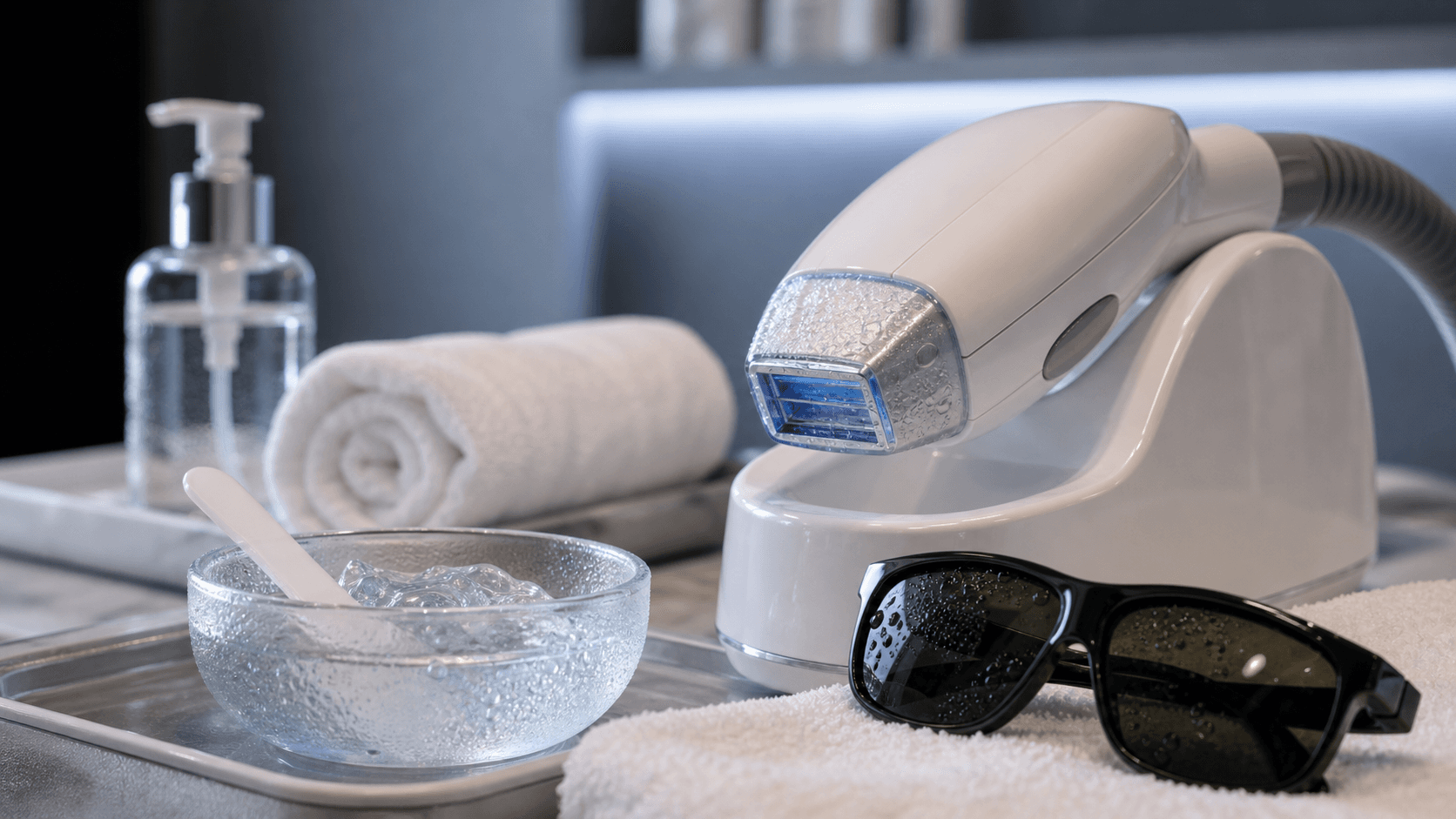
Medical-grade systems use cooling to protect and soothe the skin's surface during treatment — for example built-in cooling tips or contact cooling — which both improves comfort and adds a layer of safety. This is a big reason modern laser feels far more comfortable than older devices, and it's especially helpful on sensitive areas and darker skin.
Can anything be done if I'm worried about discomfort?
Yes. Options include a numbing cream for very sensitive areas (discuss with your clinician beforehand), starting with a smaller or less sensitive area to build confidence, and timing sessions away from times your skin is more reactive. Telling your clinician you're nervous genuinely helps — they can pace the session and talk you through it.
Does it hurt more on darker skin or in summer?
The sensation itself isn't necessarily worse, but settings are tailored to your skin tone and any recent sun exposure for safety, which can influence comfort. This is another reason an experienced clinician and the right device matter — see our articles on darker skin and sun and timing. Individual experiences vary.